Navigating the Gateway to India: A Guide to Corporate Visa Applications
India's booming economy, diverse talent pool, and strategic location make it an increasingly attractive destination for global businesses. As companies establish or expand their operations in India, the need to bring in foreign expertise – whether for short-term projects, long-term assignments, or specialized roles – becomes paramount. This necessitates understanding and navigating the corporate visa application process for India.
For foreign nationals intending to work in India, the primary visa category is the Employment Visa (E-visa). It's crucial for companies and their foreign employees to adhere strictly to Indian immigration regulations to ensure a smooth, compliant, and successful tenure in the country.

Understanding the Indian Employment (E) Visa
The Indian Employment Visa is granted to foreign nationals who are coming to India for the purpose of employment. This includes highly skilled professionals, specialists, managers, and technical experts. Key aspects of the E-visa include:
Sponsorship: Typically, an Indian company or an Indian entity of a multinational corporation must sponsor the foreign national's employment visa application.
Job Offer: A valid job offer or employment contract from the Indian employer is a fundamental requirement.
Salary Threshold: There is generally a minimum annual salary threshold (currently USD 25,000, though this can be subject to change and specific exemptions apply for certain sectors like IT or specific roles).
Skill Requirement: The visa is often granted for specialized or skilled work where Indian talent is not readily available for the specific role.
The Corporate Visa Application Process for India: A Step-by-Step Guide
The process for obtaining an Indian Employment Visa for a foreign national usually involves coordination between the foreign employee and the Indian sponsoring company.
Step 1: The Indian Company's Role – Offer Letter & Initial Documentation
The Indian company must first extend a formal offer of employment to the foreign national. This offer letter should clearly state the designation, salary, terms of employment, and duration. The company will also need to prepare internal documents such as:
Company Registration Certificate
Memorandum and Articles of Association
Income Tax Returns (ITR) or financial statements to prove its viability.
Justification letter explaining the need to hire a foreign national for the specific role.
Step 2: Foreign National's Application – Online Form & Document Gathering
The foreign national will initiate the visa application from their country of residence.
Online Visa Application Form: Complete the "Online Visa Application Form" on the Indian Visa Online website. Be meticulous with details, as errors can cause delays.
Photograph: Upload a recent passport-sized photograph meeting the specified dimensions and background.
Passport: Ensure the passport is valid for at least six months beyond the intended stay and has sufficient blank pages.
Employment Contract/Offer Letter: A copy of the signed employment contract from the Indian company.
Educational & Professional Certificates: Copies of degrees, diplomas, and experience letters relevant to the offered position.
Resume/CV: Detailed curriculum vitae.
Personal Details: Proof of address, birth certificate (sometimes required), and details of immediate family members.
Financial Proof: Evidence of financial stability, though the company's sponsorship is primary.
Step 3: Visa Fee Payment & Appointment Scheduling
After completing the online form, the visa fee must be paid according to the instructions provided by the Indian Embassy or Consulate in the applicant's country. Fees vary based on nationality and visa duration.
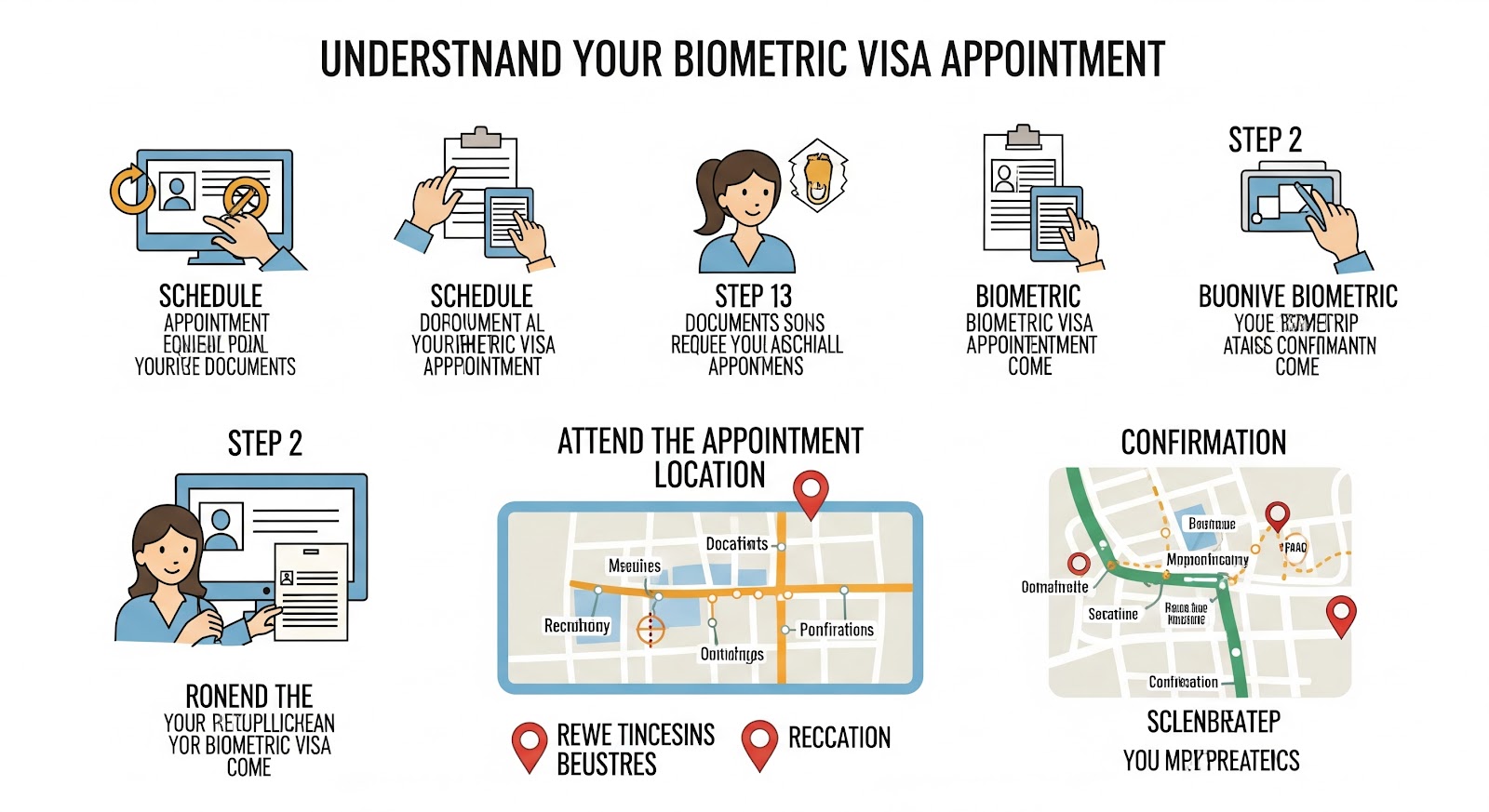
Schedule an appointment at the Indian Embassy, Consulate, or their authorized visa application center (e.g., VFS Global) in the applicant's home country.
Step 4: Biometrics & Interview (If Applicable)
The applicant will typically need to attend an in-person appointment to submit physical documents, provide biometric data (fingerprints and photograph), and sometimes attend a short interview with a consular officer. The purpose of the interview is to verify information and assess the bona fide nature of the employment.
Step 5: Visa Processing & Issuance
Once the application is submitted, it undergoes processing. The processing time can vary significantly based on the applicant's nationality, the specific mission, and the complexity of the case.
Upon approval, the Employment Visa will be stamped in the applicant's passport. The initial validity is often for one year or the duration of the contract, whichever is less, and can be extended in India.
Step 6: Post-Arrival Formalities (FRRO/FRO Registration)
Crucially, within 14 days of arriving in India on an Employment Visa, the foreign national must register with the Foreigners Regional Registration Office (FRRO) or Foreigners Registration Office (FRO) in the city where they will be working. Failure to do so can lead to severe penalties. The FRRO registration requires additional documents from both the employee and the employer.
Key Considerations for Companies:
Compliance: Ensure all aspects of the job offer and application comply with Indian labor and immigration laws.
Documentation: Maintain meticulous records of all documents provided by the employee and the company.
Relocation Support: Provide comprehensive support to the foreign national, including guidance on FRRO registration, accommodation, and cultural integration.
Navigating India's corporate visa landscape requires diligence and adherence to detailed procedures. By understanding these steps, companies can ensure a smooth transition for their foreign talent, enabling them to contribute effectively to India's thriving business environment.
Frequently Asked Questions (FAQs) About Corporate Visa Applications for India
Q1: What is the main visa type for foreign nationals coming to work in India?
A1: The main visa type for foreign nationals coming to work in India is the Employment Visa (E-visa).
Q2: Is a job offer from an Indian company mandatory for an Employment Visa?
A2: Yes, a valid and signed job offer or employment contract from an Indian company or an entity registered in India is a mandatory requirement for an Indian Employment Visa.
Q3: What is the minimum salary requirement for an Indian Employment Visa?
A3: Generally, there is a minimum annual salary threshold for the Employment Visa, which is currently around USD 25,000. However, there are specific exemptions for certain highly skilled IT professionals, language teachers, or those working on specific projects, so it's essential to check the latest guidelines.
Q4: Do foreign employees need to register with the FRRO/FRO after arriving in India?
A4: Yes, this is a critical step. Foreign nationals on an Employment Visa must register with the nearest Foreigners Regional Registration Office (FRRO) or Foreigners Registration Office (FRO) within 14 days of their arrival in India. Failure to do so can lead to penalties and affect future visa applications.
Q5: Can an Indian Employment Visa be extended while the employee is in India?
A5: Yes, an Indian Employment Visa can typically be extended while the foreign national is in India, provided they continue to meet the eligibility criteria and the extension application is submitted to the FRRO/FRO well before the current visa's expiry date. The employer usually needs to provide updated documentation as well.
Navigating the Gateway to India: A Guide to Corporate Visa Applications
India's booming economy, diverse talent pool, and strategic location make it an increasingly attractive destination for global businesses. As companies establish or expand their operations in India, the need to bring in foreign expertise – whether for short-term projects, long-term assignments, or specialized roles – becomes paramount. This necessitates understanding and navigating the corporate visa application process for India.
For foreign nationals intending to work in India, the primary visa category is the Employment Visa (E-visa). It's crucial for companies and their foreign employees to adhere strictly to Indian immigration regulations to ensure a smooth, compliant, and successful tenure in the country.
Understanding the Indian Employment (E) Visa
The Indian Employment Visa is granted to foreign nationals who are coming to India for the purpose of employment. This includes highly skilled professionals, specialists, managers, and technical experts. Key aspects of the E-visa include:
Sponsorship: Typically, an Indian company or an Indian entity of a multinational corporation must sponsor the foreign national's employment visa application.
Job Offer: A valid job offer or employment contract from the Indian employer is a fundamental requirement.
Salary Threshold: There is generally a minimum annual salary threshold (currently USD 25,000, though this can be subject to change and specific exemptions apply for certain sectors like IT or specific roles).
Skill Requirement: The visa is often granted for specialized or skilled work where Indian talent is not readily available for the specific role.
The Corporate Visa Application Process for India: A Step-by-Step Guide
The process for obtaining an Indian Employment Visa for a foreign national usually involves coordination between the foreign employee and the Indian sponsoring company.
Step 1: The Indian Company's Role – Offer Letter & Initial Documentation
The Indian company must first extend a formal offer of employment to the foreign national. This offer letter should clearly state the designation, salary, terms of employment, and duration. The company will also need to prepare internal documents such as:
Company Registration Certificate
Memorandum and Articles of Association
Income Tax Returns (ITR) or financial statements to prove its viability.
Justification letter explaining the need to hire a foreign national for the specific role.
Step 2: Foreign National's Application – Online Form & Document Gathering
The foreign national will initiate the visa application from their country of residence.
Online Visa Application Form: Complete the "Online Visa Application Form" on the Indian Visa Online website. Be meticulous with details, as errors can cause delays.
Photograph: Upload a recent passport-sized photograph meeting the specified dimensions and background.
Passport: Ensure the passport is valid for at least six months beyond the intended stay and has sufficient blank pages.
Employment Contract/Offer Letter: A copy of the signed employment contract from the Indian company.
Educational & Professional Certificates: Copies of degrees, diplomas, and experience letters relevant to the offered position.
Resume/CV: Detailed curriculum vitae.
Personal Details: Proof of address, birth certificate (sometimes required), and details of immediate family members.
Financial Proof: Evidence of financial stability, though the company's sponsorship is primary.
Step 3: Visa Fee Payment & Appointment Scheduling
After completing the online form, the visa fee must be paid according to the instructions provided by the Indian Embassy or Consulate in the applicant's country. Fees vary based on nationality and visa duration.
Schedule an appointment at the Indian Embassy, Consulate, or their authorized visa application center (e.g., VFS Global) in the applicant's home country.
Step 4: Biometrics & Interview (If Applicable)
The applicant will typically need to attend an in-person appointment to submit physical documents, provide biometric data (fingerprints and photograph), and sometimes attend a short interview with a consular officer. The purpose of the interview is to verify information and assess the bona fide nature of the employment.
Step 5: Visa Processing & Issuance
Once the application is submitted, it undergoes processing. The processing time can vary significantly based on the applicant's nationality, the specific mission, and the complexity of the case.
Upon approval, the Employment Visa will be stamped in the applicant's passport. The initial validity is often for one year or the duration of the contract, whichever is less, and can be extended in India.
Step 6: Post-Arrival Formalities (FRRO/FRO Registration)
Crucially, within 14 days of arriving in India on an Employment Visa, the foreign national must register with the Foreigners Regional Registration Office (FRRO) or Foreigners Registration Office (FRO) in the city where they will be working. Failure to do so can lead to severe penalties. The FRRO registration requires additional documents from both the employee and the employer.
Key Considerations for Companies:
Compliance: Ensure all aspects of the job offer and application comply with Indian labor and immigration laws.
Documentation: Maintain meticulous records of all documents provided by the employee and the company.
Relocation Support: Provide comprehensive support to the foreign national, including guidance on FRRO registration, accommodation, and cultural integration.
Navigating India's corporate visa landscape requires diligence and adherence to detailed procedures. By understanding these steps, companies can ensure a smooth transition for their foreign talent, enabling them to contribute effectively to India's thriving business environment.
Frequently Asked Questions (FAQs) About Corporate Visa Applications for India
Q1: What is the main visa type for foreign nationals coming to work in India?
A1: The main visa type for foreign nationals coming to work in India is the Employment Visa (E-visa).
Q2: Is a job offer from an Indian company mandatory for an Employment Visa?
A2: Yes, a valid and signed job offer or employment contract from an Indian company or an entity registered in India is a mandatory requirement for an Indian Employment Visa.
Q3: What is the minimum salary requirement for an Indian Employment Visa?
A3: Generally, there is a minimum annual salary threshold for the Employment Visa, which is currently around USD 25,000. However, there are specific exemptions for certain highly skilled IT professionals, language teachers, or those working on specific projects, so it's essential to check the latest guidelines.
Q4: Do foreign employees need to register with the FRRO/FRO after arriving in India?
A4: Yes, this is a critical step. Foreign nationals on an Employment Visa must register with the nearest Foreigners Regional Registration Office (FRRO) or Foreigners Registration Office (FRO) within 14 days of their arrival in India. Failure to do so can lead to penalties and affect future visa applications.
Q5: Can an Indian Employment Visa be extended while the employee is in India?
A5: Yes, an Indian Employment Visa can typically be extended while the foreign national is in India, provided they continue to meet the eligibility criteria and the extension application is submitted to the FRRO/FRO well before the current visa's expiry date. The employer usually needs to provide updated documentation as well.
Navigating the Gateway to India: A Guide to Corporate Visa Applications
India's booming economy, diverse talent pool, and strategic location make it an increasingly attractive destination for global businesses. As companies establish or expand their operations in India, the need to bring in foreign expertise – whether for short-term projects, long-term assignments, or specialized roles – becomes paramount. This necessitates understanding and navigating the corporate visa application process for India.
For foreign nationals intending to work in India, the primary visa category is the Employment Visa (E-visa). It's crucial for companies and their foreign employees to adhere strictly to Indian immigration regulations to ensure a smooth, compliant, and successful tenure in the country.
Understanding the Indian Employment (E) Visa
The Indian Employment Visa is granted to foreign nationals who are coming to India for the purpose of employment. This includes highly skilled professionals, specialists, managers, and technical experts. Key aspects of the E-visa include:
Sponsorship: Typically, an Indian company or an Indian entity of a multinational corporation must sponsor the foreign national's employment visa application.
Job Offer: A valid job offer or employment contract from the Indian employer is a fundamental requirement.
Salary Threshold: There is generally a minimum annual salary threshold (currently USD 25,000, though this can be subject to change and specific exemptions apply for certain sectors like IT or specific roles).
Skill Requirement: The visa is often granted for specialized or skilled work where Indian talent is not readily available for the specific role.
The Corporate Visa Application Process for India: A Step-by-Step Guide
The process for obtaining an Indian Employment Visa for a foreign national usually involves coordination between the foreign employee and the Indian sponsoring company.
Step 1: The Indian Company's Role – Offer Letter & Initial Documentation
The Indian company must first extend a formal offer of employment to the foreign national. This offer letter should clearly state the designation, salary, terms of employment, and duration. The company will also need to prepare internal documents such as:
Company Registration Certificate
Memorandum and Articles of Association
Income Tax Returns (ITR) or financial statements to prove its viability.
Justification letter explaining the need to hire a foreign national for the specific role.
Step 2: Foreign National's Application – Online Form & Document Gathering
The foreign national will initiate the visa application from their country of residence.
Online Visa Application Form: Complete the "Online Visa Application Form" on the Indian Visa Online website. Be meticulous with details, as errors can cause delays.
Photograph: Upload a recent passport-sized photograph meeting the specified dimensions and background.
Passport: Ensure the passport is valid for at least six months beyond the intended stay and has sufficient blank pages.
Employment Contract/Offer Letter: A copy of the signed employment contract from the Indian company.
Educational & Professional Certificates: Copies of degrees, diplomas, and experience letters relevant to the offered position.
Resume/CV: Detailed curriculum vitae.
Personal Details: Proof of address, birth certificate (sometimes required), and details of immediate family members.
Financial Proof: Evidence of financial stability, though the company's sponsorship is primary.
Step 3: Visa Fee Payment & Appointment Scheduling
After completing the online form, the visa fee must be paid according to the instructions provided by the Indian Embassy or Consulate in the applicant's country. Fees vary based on nationality and visa duration.
Schedule an appointment at the Indian Embassy, Consulate, or their authorized visa application center (e.g., VFS Global) in the applicant's home country.
Step 4: Biometrics & Interview (If Applicable)
The applicant will typically need to attend an in-person appointment to submit physical documents, provide biometric data (fingerprints and photograph), and sometimes attend a short interview with a consular officer. The purpose of the interview is to verify information and assess the bona fide nature of the employment.
Step 5: Visa Processing & Issuance
Once the application is submitted, it undergoes processing. The processing time can vary significantly based on the applicant's nationality, the specific mission, and the complexity of the case.
Upon approval, the Employment Visa will be stamped in the applicant's passport. The initial validity is often for one year or the duration of the contract, whichever is less, and can be extended in India.
Step 6: Post-Arrival Formalities (FRRO/FRO Registration)
Crucially, within 14 days of arriving in India on an Employment Visa, the foreign national must register with the Foreigners Regional Registration Office (FRRO) or Foreigners Registration Office (FRO) in the city where they will be working. Failure to do so can lead to severe penalties. The FRRO registration requires additional documents from both the employee and the employer.
Key Considerations for Companies:
Compliance: Ensure all aspects of the job offer and application comply with Indian labor and immigration laws.
Documentation: Maintain meticulous records of all documents provided by the employee and the company.
Relocation Support: Provide comprehensive support to the foreign national, including guidance on FRRO registration, accommodation, and cultural integration.
Navigating India's corporate visa landscape requires diligence and adherence to detailed procedures. By understanding these steps, companies can ensure a smooth transition for their foreign talent, enabling them to contribute effectively to India's thriving business environment.
Frequently Asked Questions (FAQs) About Corporate Visa Applications for India
Q1: What is the main visa type for foreign nationals coming to work in India?
A1: The main visa type for foreign nationals coming to work in India is the Employment Visa (E-visa).
Q2: Is a job offer from an Indian company mandatory for an Employment Visa?
A2: Yes, a valid and signed job offer or employment contract from an Indian company or an entity registered in India is a mandatory requirement for an Indian Employment Visa.
Q3: What is the minimum salary requirement for an Indian Employment Visa?
A3: Generally, there is a minimum annual salary threshold for the Employment Visa, which is currently around USD 25,000. However, there are specific exemptions for certain highly skilled IT professionals, language teachers, or those working on specific projects, so it's essential to check the latest guidelines.
Q4: Do foreign employees need to register with the FRRO/FRO after arriving in India?
A4: Yes, this is a critical step. Foreign nationals on an Employment Visa must register with the nearest Foreigners Regional Registration Office (FRRO) or Foreigners Registration Office (FRO) within 14 days of their arrival in India. Failure to do so can lead to penalties and affect future visa applications.
Q5: Can an Indian Employment Visa be extended while the employee is in India?
A5: Yes, an Indian Employment Visa can typically be extended while the foreign national is in India, provided they continue to meet the eligibility criteria and the extension application is submitted to the FRRO/FRO well before the current visa's expiry date. The employer usually needs to provide updated documentation as well.


Comments
Post a Comment