Schengen Visa Guide for Indians: Navigating Europe's Borderless Zone
For Indian travelers dreaming of exploring Europe's rich history, diverse cultures, and stunning landscapes, the Schengen Visa is the essential gateway. This short-stay visa allows visitors to travel freely within the Schengen Area, a zone comprising 29 European countries that have abolished internal border controls. It's a single visa for multiple destinations, making multi-country European itineraries incredibly convenient.
Understanding the application process is crucial for a smooth journey. This guide will walk Indian citizens through everything they need to know about securing a Schengen Visa.

What is the Schengen Area and the Schengen Visa?
The Schengen Area is a zone of free movement, much like a single country for travel purposes. It includes most EU member states and a few non-EU countries like Iceland, Liechtenstein, Norway, and Switzerland. As of March 31, 2024, the Schengen Area comprises 29 countries: Austria, Belgium, Bulgaria, Croatia, Czechia, Denmark, Estonia, Finland, France, Germany, Greece, Hungary, Iceland, Italy, Latvia, Liechtenstein, Lithuania, Luxembourg, Malta,1 Netherlands, Norway, Poland, Portugal, Romania, Slovakia, Slovenia, Spain, Sweden,2 and Switzerland.
A Schengen Visa3 (Type C) is a short-stay visa that permits Indian citizens to visit any of these 29 countries for tourism, business, visiting family/friends, short-term study, or medical treatment for up to 90 days within any 180-day period. There are also Airport Transit Visas (Type A) for those only transiting through a Schengen airport.
Who Needs to Apply?
Indian passport holders always require a Schengen Visa to enter the Schengen Area, regardless of the purpose or duration of their short stay.
Where to Apply? (Jurisdiction Rules)
This is a critical point: you must apply at the embassy or consulate of the main destination country.
If you are visiting only one Schengen country: Apply at the embassy/consulate of that specific country.
If you are visiting multiple Schengen countries:
Apply at the embassy/consulate of the country where you will spend the longest duration of your stay.
If you plan to spend an equal amount of time in several countries, apply at the embassy/consulate of the first Schengen country you enter.
Most Schengen countries have outsourced visa application submissions to VFS Global or other authorized visa application centers in major Indian cities.
When to Apply?
You can apply for a Schengen Visa up to six months before your intended travel date. It is highly recommended to apply well in advance, ideally at least 15-30 days before your trip, especially during peak travel seasons, as processing times can extend.
Required Documents for Indian Applicants
The list of documents is extensive and must be meticulously prepared. General requirements include:
Schengen Visa Application Form: Duly filled and signed. For minors, signed by both parents/legal guardians.
Valid Passport:
Issued within the last 10 years.
Valid for at least three months beyond your intended departure from the Schengen Area.
Must have at least two blank pages.
Copies of the front and last pages, and any previous Schengen/UK/US visas.
Photographs: Two recent (not older than six months) passport-sized color photos (3.5x4.5 cm) with a white background, meeting Schengen photo requirements.
Cover Letter: A personal letter addressed to the Embassy/Consulate, explaining the purpose of your visit, detailed itinerary (countries, dates, activities), travel dates, and acknowledging your intention to return to India.
Flight Itinerary/Round-trip Reservations: Confirmed flight bookings showing entry and exit from the Schengen Area. It's often recommended to show a complete itinerary, not just flight tickets.
Proof of Accommodation: Hotel reservations for your entire stay in all Schengen countries you plan to visit, or a letter of invitation from a host with their proof of address if staying with family/friends.
Proof of Financial Means: Evidence that you can support yourself financially during your trip. This typically includes:
Bank statements (last 3-6 months, stamped by the bank, fetched shortly before the appointment).
Salary slips (last 3 months, if employed).
Income Tax Returns (ITR) for the last two assessment years.
Proof of other income (e.g., rental income, investments).
Minimum daily funds requirement can vary by country (e.g., €50-€120 per day).
Travel Medical Insurance: Mandatory. Must cover the entire period of your intended stay, be valid throughout the entire Schengen Area, and provide a minimum coverage of €30,000 for emergency medical treatment, hospitalization, and repatriation.
Proof of Employment/Status:
If Employed: No Objection Certificate (NOC) from your employer, employment contract, and company leave letter.
If Self-Employed: Business registration documents, bank statements of the company, and ITR.
If Student: Enrollment certificate from your educational institution and NOC from school/college.
If Retired: Pension statements.
Civil Status Proof: Marriage certificate (if applicable), birth certificate of children (if applicable).
Sponsorship Letter (if applicable): If a third party is sponsoring your trip, a formal sponsorship letter, their passport copy, proof of residence (if residing in Schengen), and their bank statements.
Application Process: Step-by-Step for Indians
Determine Visa Type & Main Destination: Identify the specific Schengen country responsible for your visa application based on your itinerary.
Gather Documents: Prepare all the required documents meticulously. Ensure they are in English or accompanied by certified translations.
Fill Online Application Form: Many countries now require you to fill the form online (e.g., through platforms like VIDEX for Germany or France-Visas). Print it, sign it, and carry it.
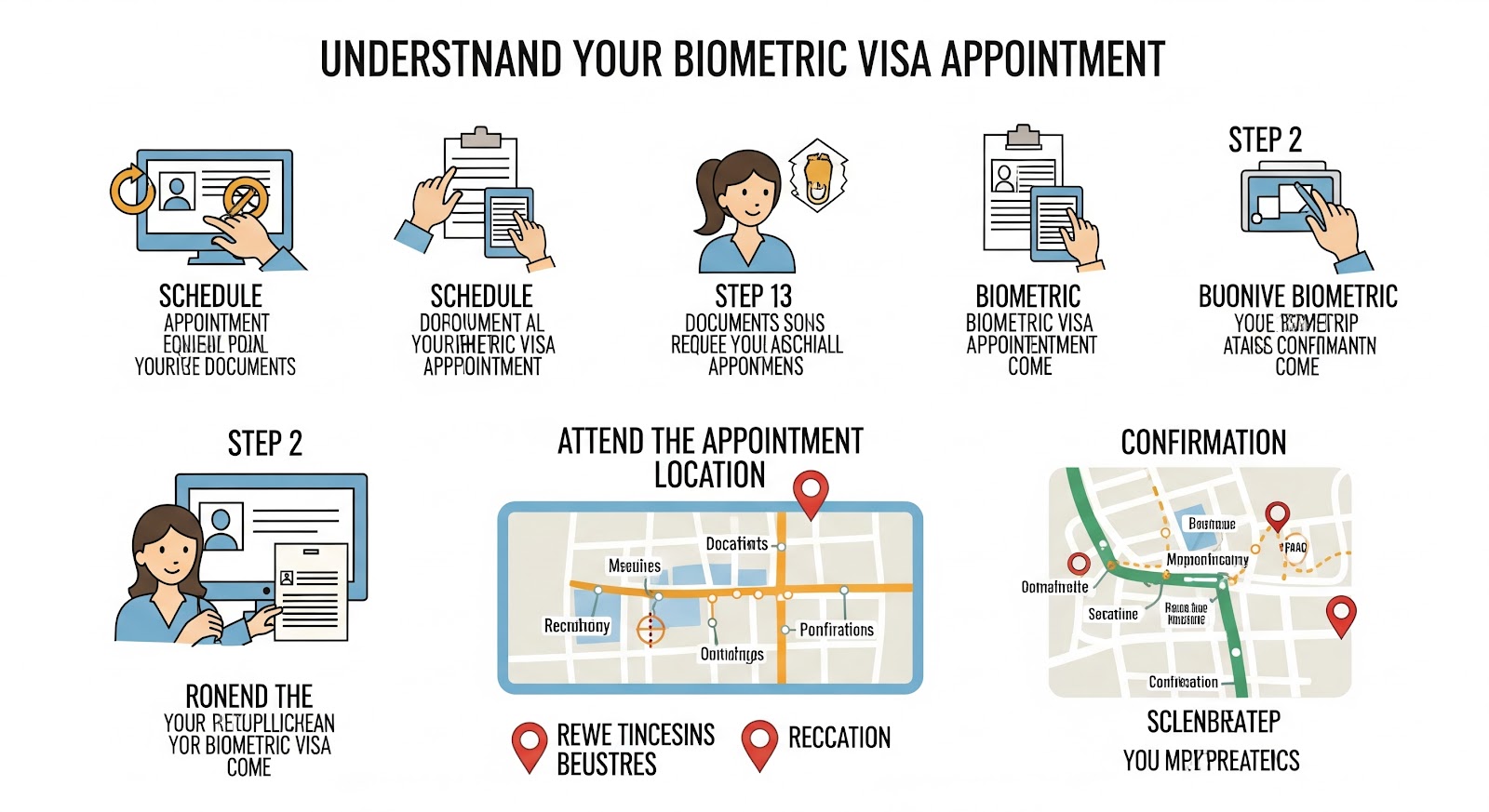
Book Appointment: Schedule an appointment at the VFS Global (or relevant visa center) in your jurisdiction.
Pay Fees:
Visa Fee: As of January 1, 2025, the standard Schengen visa fee for adults is €90 (approx. ₹8,000-₹8,650, depending on exchange rates). For children aged 6-12, it's €45. Children under 6 are exempt.
VFS Service Charge: An additional service fee (typically €20-€25, approx. ₹1,800-₹2,200) is levied by the visa application center.
Fees are usually paid at the center during submission, or sometimes online during appointment booking. These fees are generally non-refundable.
Attend Biometric Appointment: Go to the visa application center on your appointment date. Your fingerprints and a digital photograph will be collected. Submit all your original documents along with photocopies.
Track Application: You will receive a tracking number to monitor the status of your application online.
Collect Passport: Once a decision is made, you will be notified to collect your passport.
Processing Times
The standard processing time for a Schengen visa application is 15 calendar days. However, this can be extended to up to 45 days if further examination of the application or additional documents are required. During peak seasons or for certain nationalities, delays are possible.
Recent Update: "Cascade" Regime for Indian Nationals (as of April 18, 2024)
A significant update for Indian travelers is the introduction of the "Cascade" regime. Under this, eligible Indian nationals can receive:
A two-year multiple-entry Schengen visa if they have lawfully used two previous Schengen visas within the last three years.
This two-year visa can then be extended to a five-year multiple-entry visa if specific conditions and lawful use are met.
This initiative aims to facilitate frequent travel for legitimate Indian travelers.
Important Tips for a Successful Application
Accuracy and Honesty: Provide accurate and consistent information across all documents. Any discrepancies can lead to refusal.
Organize Documents: Present your documents neatly and in the order specified by the embassy/consulate or VFS Global.
Proof of Ties to India: Strong proof of ties to India (e.g., family, property, stable job) can reassure officials of your intention to return.
Travel Insurance: Purchase comprehensive travel insurance as it's mandatory and crucial for your safety.
Don't Buy Non-Refundable Tickets/Bookings: Until your visa is approved, avoid making non-refundable travel bookings.
Check Specific Country Requirements: While this guide provides general information, always refer to the official website of the specific Schengen country's embassy or consulate in India for the most up-to-date and precise requirements.
The Schengen Visa is an invaluable tool for Indian travelers, offering unparalleled access to a vast and enchanting part of the world. With careful planning and diligent preparation, your European adventure awaits.


Comments
Post a Comment