The Essential Guide to the USA Corporate Travel Visa for Indian Companies
For ambitious Indian corporations, travel to the United States is not just a trip; it's a strategic necessity. Whether it's for negotiating with clients in Silicon Valley, attending a major industry conference in New York, or collaborating on projects with a US-based team, these visits are crucial for growth. However, the path to getting your employees on a plane is paved with complex immigration procedures.
This guide provides a clear, corporate-focused framework for navigating the USA corporate travel visa process in 2025, helping Indian companies manage the challenges of long wait times and stringent documentation requirements effectively.

It's a B-1 Visa, but with a Corporate Focus
First, let's clarify the terminology. There isn't a separate visa category officially named the "USA corporate travel visa". The correct visa is the B-1 Visitor Visa for Business. However, when an employee is traveling on behalf of their company, the application takes on a distinct corporate focus. The U.S. consulate's assessment shifts to scrutinizing the legitimacy of the company, the genuine need for the employee's travel, and the company's role in ensuring the employee's timely return to India.
The Corporate Documentation and Strategy Checklist
Managing a USA corporate travel visa application requires a proactive and organized approach from the employer. Your company's credibility is as much under review as the employee's.
1. The Corporate Covering Letter: Your Company's Testimony
This is the most critical document your company will produce. On official letterhead, it must clearly state:
The employee’s full name, designation, and length of service.
A detailed and specific purpose for the trip (e.g., "to conduct final-stage negotiations for the Acme software contract and provide a two-day technical demonstration").
An unequivocal statement that the company is sponsoring the trip and will cover all associated costs.
An assertion of the employee's importance to your Indian operations, which reinforces their strong ties to home and intent to return.
2. The U.S. Host's Invitation Letter
A formal invitation from the American counterpart is mandatory. It should corroborate the purpose and dates mentioned in your covering letter, adding another layer of authenticity to the USA corporate travel visa application.
3. Managing Group Travel and Appointments
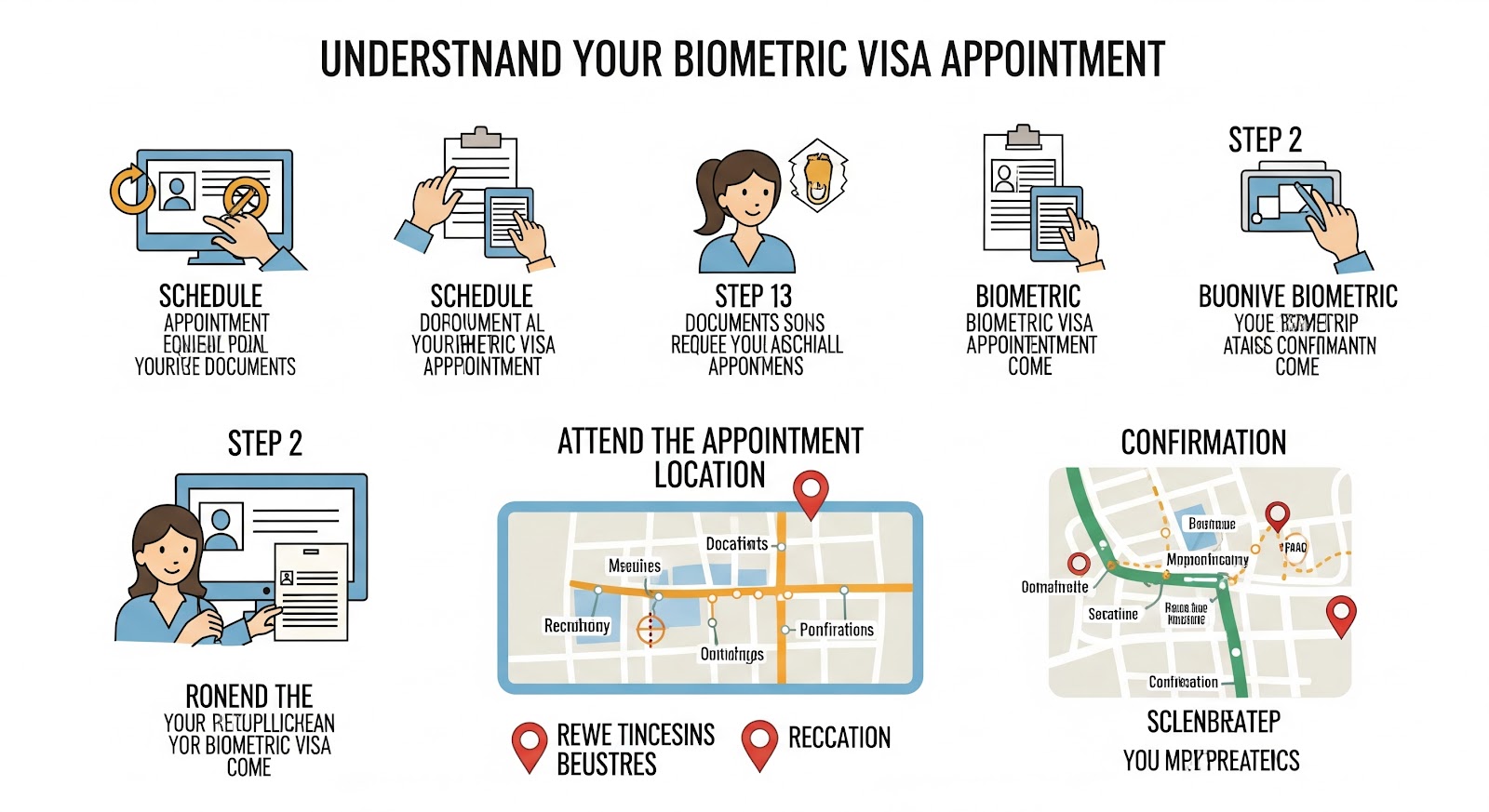
As of June 2025, securing visa interview slots in India involves significant wait times. For teams traveling together, trying to book individual appointments that align can be a logistical nightmare. While the portal offers an option to add dependents, scheduling for a group of non-related employees requires careful, long-term planning. Companies must initiate the process many months, often over a year, in advance.
Permissible Activities: A Critical Boundary for Companies
Understanding the legal limitations of the USA corporate travel visa is crucial to maintaining corporate compliance.
Permitted Activities Include:
Attending meetings and consultations.
Negotiating contracts.
Participating in scientific, educational, or professional conferences.
Undertaking independent research.
Prohibited Activities Include:
Engaging in hands-on, productive work that would typically be performed by a US worker.
Receiving a salary or remuneration from a U.S. source.
Enrolling in a course of study.
A specific, complex area is the "B-1 in lieu of H-1B" provision, which allows for very specific, short-term work under strict conditions. Navigating this requires expert legal or visa guidance. Mistakenly having an employee perform paid work on a standard USA corporate travel visa can have severe consequences for both the employee and the company.
Conclusion
The journey to securing a US visa for your employees is a marathon, not a sprint. It demands foresight, precision, and a deep understanding of the consulate's expectations. For Indian companies, a flawless application is not just a goal; it's a necessity to overcome the hurdle of long processing timelines. A strategic and well-managed approach to the USA corporate travel visa process is fundamental to unlocking global business opportunities without facing the risk of costly delays and denials.
Frequently Asked Questions (FAQs)
1. As a company, can we pay the visa fees for all our employees in a single transaction?
No. The MRV visa fee is tied to an individual's DS-160 confirmation number. Each employee's fee must be paid separately and the unique receipt number must be used to schedule their specific appointment.
2. Our employee has sufficient personal funds. Does the company still need to issue a sponsorship letter?
Yes, absolutely. For a USA corporate travel visa, the consulate expects the company to sponsor the trip. It validates that the trip is for official business. Relying on an employee's personal funds can be misconstrued as a personal trip, potentially weakening the application.
3. What is the "B-1 in lieu of H-1B" visa?
It's a highly specific provision that allows an employee of a foreign company to perform H-1B-level work in the U.S. for a short duration, provided they remain on their foreign payroll and are not paid from a U.S. source. It is complex and has very strict eligibility criteria.
4. How do we schedule visa appointments for a whole team traveling together?
You can attempt to schedule appointments close to each other by logging into the portal and managing profiles, but finding consecutive slots is extremely difficult due to high demand. The most realistic approach is to plan for your team to have interviews on different days or even weeks.
5. What is the most common reason for the refusal of a USA corporate travel visa application?
The most common reason is the applicant failing to convince the consular officer of their "non-immigrant intent" – that is, their strong ties to India and their intention to return after the temporary business visit. This is why company letters emphasizing the employee's key role in India are so important.


Comments
Post a Comment