Unlocking Opportunities: Understanding UK Business Visa Requirements
The United Kingdom remains a magnet for global business, offering a robust economy, strategic location, and a wealth of opportunities for international collaboration. For individuals looking to engage in business activities in the UK, understanding the specific visa requirements is paramount. Unlike some countries, the UK has a highly structured immigration system, and choosing the correct visa category and submitting a meticulously prepared application is crucial for a successful outcome.

Defining Your Business Visit: The Standard Visitor Visa
For most short-term business activities, the Standard Visitor visa is the primary route. It allows you to undertake a range of permitted business activities, including:
Attending meetings, conferences, seminars, or training.
Negotiating and signing contracts.
Undertaking site visits and inspections.
Gathering information for your employer abroad.
Being an internal auditor for a UK-based branch of your overseas company.
Engaging in specific professional activities as an expert (e.g., arts, sports, academia).
It's crucial to understand what you cannot do on a Standard Visitor visa: you cannot work, receive payment from a UK source (unless specifically permitted for certain professional activities), live in the UK for extended periods through frequent visits, or claim public funds.
Key Requirements for a UK Standard Visitor Visa (Business Purposes)
When applying for a Standard Visitor visa for business, you'll need to demonstrate your eligibility and provide supporting documentation. While the exact list can vary slightly based on individual circumstances, here are the core requirements:
Valid Passport: Your passport must be valid for the entire duration of your intended stay in the UK.
Completed Online Application Form: All UK visa applications are submitted online via the official UK government website (GOV.UK). Ensure all information is accurate and consistent with your supporting documents.
Passport-Sized Photographs: Recent, color photographs adhering to UK visa specifications.
Proof of Funds: You must demonstrate that you have sufficient funds to support yourself and any dependents during your stay without working or accessing public funds. This usually involves:
Bank statements (typically for the last 6 months).
Salary slips.
Evidence of other income or savings.
If a third party (e.g., your company) is covering your costs, a letter from them confirming this and their financial stability.
Proof of Accommodation: Where you plan to stay in the UK (e.g., hotel booking, invitation from a host with details of their accommodation).
Confirmed Travel Itinerary: Details of your flights to and from the UK.
Evidence of Business Activities: This is critical for a business-related visitor visa:
Invitation Letter: A formal letter from the UK company or organization you are visiting. This letter should clearly state:
The purpose of your visit (e.g., meeting, conference, training).
The dates of your visit.
Your relationship to the UK company/organization (if any).
Confirmation of who will bear your costs (if applicable).
Contact details of the inviting party.
Letter from Your Employer (in your home country): A letter from your current employer stating your designation, the purpose of your trip, the duration, and confirming that you are employed by them and will return to your job.
Conference/Event Registration: If attending a specific event, provide proof of registration.
Evidence of Business Relationship: If applicable, provide contracts, correspondence, or other documents demonstrating an existing business relationship.
Ties to Your Home Country: You must convince the visa officer that you intend to leave the UK at the end of your visit. This can be shown through:
Evidence of family ties (marriage certificate, birth certificates of dependents).
Property ownership.
Ongoing employment in your home country.
Other significant commitments in your home country.
Previous Travel History: Details of any previous international travel can also be helpful.
The Application Process
Complete the Online Application: Go to the official GOV.UK website and fill out the "Standard Visitor visa" application form.
Pay the Visa Fee: Fees vary depending on the visa duration (6 months, 2 years, 5 years, or 10 years).
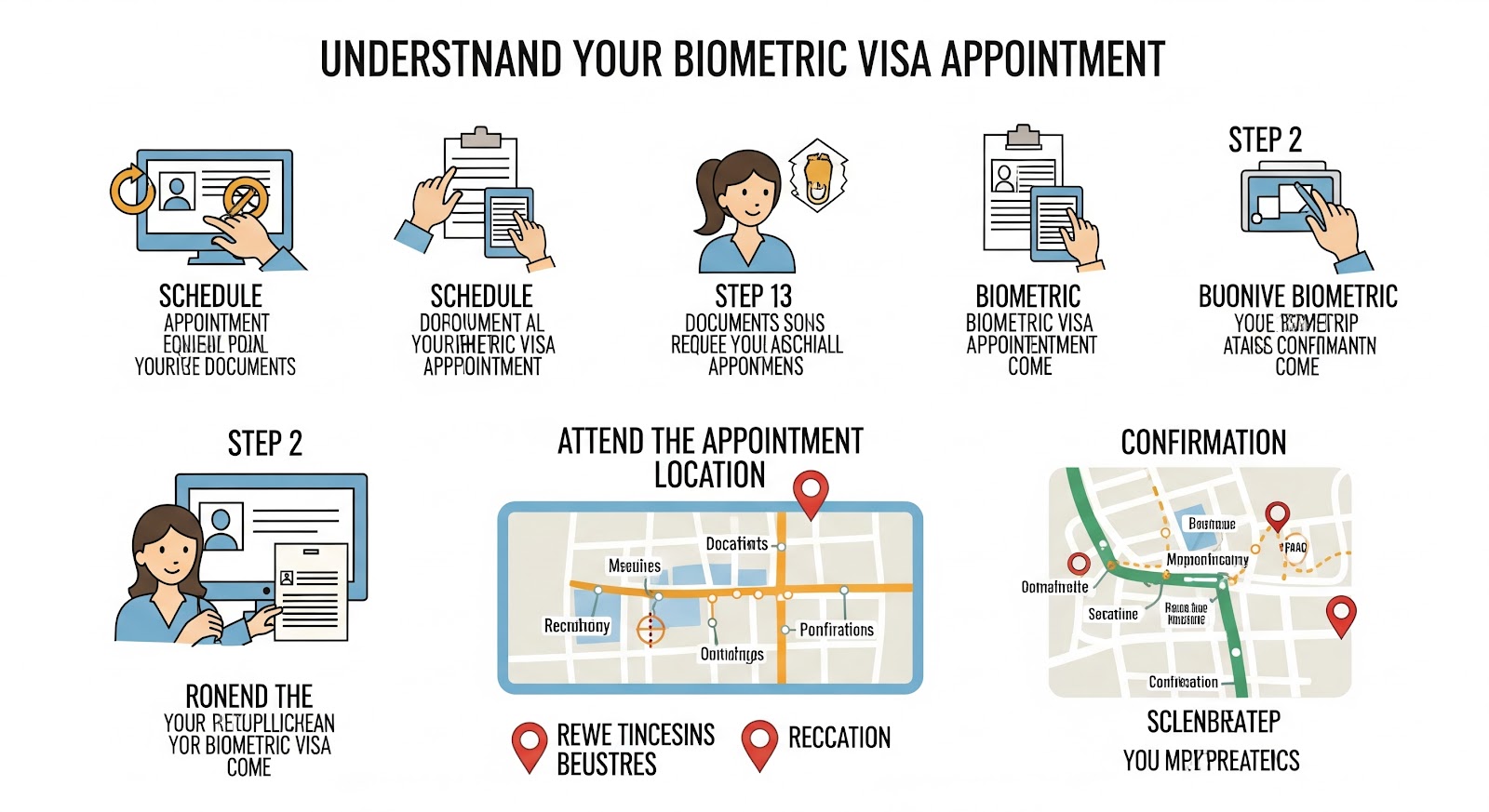
Book an Appointment: Schedule an appointment at a Visa Application Centre (VAC) in your country.
Attend Biometrics: At the VAC, your fingerprints and photograph (biometrics) will be taken. You will also submit your supporting documents. Some VACs offer document scanning services, or you may need to upload them yourself prior to your appointment.
Await Decision: Visa processing times vary but are generally within 3 weeks for standard applications. Priority services are often available for an additional fee.
Passport Collection: You will be notified when your passport, with the visa vignette (sticker), is ready for collection or dispatched.
Important Considerations:
Honesty and Accuracy: Provide truthful and accurate information. Any misrepresentation can lead to refusal and a potential ban from the UK.
Sufficient Funds: This is a common reason for refusal. Ensure your bank statements clearly show you have adequate funds for your entire trip.
Clear Purpose: The purpose of your visit must be genuinely for permitted business activities.
Return Intent: You must demonstrate strong ties to your home country to convince the visa officer that you will leave the UK.
Health Surcharge: For visitor visas, you generally do not pay the Immigration Health Surcharge (IHS), which applies to longer-term visas.
Navigating the UK business visa requirements might seem complex, but with meticulous preparation and a clear understanding of the expectations, your path to unlocking business opportunities in the United Kingdom can be remarkably smooth.
Frequently Asked Questions (FAQs) about UK Business Visas
Q1: What's the difference between a Standard Visitor visa for business and a work visa?
A1: A Standard Visitor visa allows you to conduct specific short-term business activities (meetings, conferences, training). A work visa (e.g., Skilled Worker visa) is for individuals who will be employed by a UK company and receive payment from a UK source. You cannot work on a Standard Visitor visa.
Q2: How long can I stay in the UK on a Standard Visitor visa for business?
A2: A Standard Visitor visa typically allows you to stay for up to 6 months at a time. However, the visa can be issued for longer durations (2, 5, or 10 years), allowing multiple visits of up to 6 months each.
Q3: Do I need an invitation letter from a UK company?
A3: While not strictly mandatory for every single business visitor (e.g., if you're attending a public conference), a formal invitation letter from the UK company or organization you are visiting is highly recommended and often crucial as strong evidence of your business purpose.
Q4: Can I extend my Standard Visitor visa while in the UK?
A4: It is generally very difficult to extend a Standard Visitor visa unless there are exceptional compassionate circumstances. It is almost never extended for additional business activities. You are expected to leave at the end of your permitted stay.
Q5: What happens if my UK business visa is refused?
A5: If your visa is refused, you will receive a refusal letter explaining the reasons. You cannot appeal a visitor visa refusal, but you can reapply, addressing the issues highlighted in the refusal letter. Seeking professional advice is recommended for reapplications.
Q6: Do I need to provide bank statements even if my company is covering my expenses?
A6: Yes, it's still advisable to provide your personal bank statements to demonstrate your financial stability. If your company is sponsoring your trip, you'll also need a letter from your company confirming this and providing evidence of their financial capacity.
Q7: Can I take dependents (family) with me on a UK Standard Visitor visa for business?
A7: Yes, your dependents can apply for a Standard Visitor visa separately, mentioning their purpose is tourism or accompanying you. Each dependent must meet the visitor visa requirements independently, including demonstrating sufficient funds for their stay.


Comments
Post a Comment