Visa Document Checklist 2025: Your Essential Guide for Any Application
Embarking on an international journey, whether for leisure, study, work, or family, invariably involves navigating the often-complex visa application process. While specific requirements can vary significantly between countries and visa types, there's a core set of documents that are almost universally requested. Understanding this Visa Document Checklist for 2025 is your first and most crucial step towards a successful application, helping you avoid delays, refusals, and last-minute stress.
This guide outlines the general categories of documents you'll need, along with important considerations for each, to prepare you for virtually any visa application in the coming year.

The Universal Visa Document Checklist 2025
Think of these as the foundational pillars of your visa application. Regardless of your destination or purpose, you'll almost certainly need to provide these:
Valid Passport:
Validity: Your passport must be valid for at least six months beyond your intended period of stay in the destination country. Some countries require even longer validity.
Blank Pages: Must have at least two blank pages for visa stamps and entry/exit stamps.
Issuance Date: Typically, passports should have been issued within the last 10 years.
Copies: Always provide photocopies of the bio-data page (first page), last page (for Indian passports), and any previous visas or travel history.
Old Passports: If you have expired passports containing previous visas, carry them as well.
Visa Application Form:
Accuracy: Duly filled out, accurate, and signed. Most countries now require online forms (e.g., DS-160 for the US, online forms for Schengen countries).
Consistency: Ensure all information on the form is consistent with your supporting documents.
Printout: Print the confirmation page with barcodes as instructed.
Passport-Sized Photographs:
Recent: Taken within the last three to six months.
Specifications: Adhere strictly to the specific dimensions (e.g., 35x45mm, 2x2 inches), background color (usually white or light grey), lighting, and facial expression (neutral, no smiling, no obstructions like glasses unless for medical reasons, no hats/head coverings unless for religious purposes).
Quantity: Usually two photos are required. It's always a good idea to carry extra.
Professional: It's best to get these done at a professional studio familiar with visa photo requirements.
Proof of Purpose of Travel / Detailed Itinerary:
Tourism: Confirmed flight reservations (round-trip), detailed day-by-day itinerary (even if rough), hotel bookings or confirmed accommodation for the entire trip, and possibly tour package details.
Visiting Family/Friends: Formal invitation letter from the host (often an official form from their local municipality), copy of host's passport/residence permit, and proof of their address.
Business: Invitation letter from the inviting company abroad, letter from your employer in your home country stating the purpose of the trip and guaranteeing expenses, and details of meetings/conferences.
Study: Confirmation of Acceptance for Studies (CAS) or admission letter from the educational institution, academic transcripts, and diplomas.
Work: Job offer letter, employment contract, sponsorship details (if applicable), and professional qualifications.
Medical: Letter from a doctor/hospital in your home country stating the need for treatment, and a letter from the foreign medical facility confirming acceptance and estimated costs.
Proof of Financial Means:
Bank Statements: Original or officially certified bank statements for the last 3-6 months, showing sufficient funds to cover your trip expenses (tuition, living costs, return travel). Avoid large, unexplained deposits just before applying.
Salary Slips: For employed individuals, salary slips for the last 3-6 months.
Income Tax Returns (ITR): For the last 2-3 assessment years, proving consistent income and financial stability.
Proof of Other Income: Rental income, dividends, etc.
Sponsorship Letter: If someone else is sponsoring your trip, a formal affidavit of support along with the sponsor's financial documents (as detailed in previous articles).
Credit Card Statements/Limits: Sometimes accepted as supplementary proof.
Travel Medical Insurance:
Mandatory: For many countries (e.g., Schengen Area), travel insurance is mandatory.
Coverage: Minimum coverage typically €30,000 for medical emergencies, hospitalization, and repatriation.
Validity: Must cover the entire period of your intended stay and be valid in all areas you plan to visit.
Proof of Accommodation:
Hotel bookings, Airbnb confirmations, rental agreements, or a letter of accommodation from your host (with their address and contact details). This should cover your entire stay.
Proof of Ties to Home Country:
This demonstrates your intention to return to your home country after your trip. Essential for non-immigrant visas.
Employment: Letter from your employer stating your position, leave approval, and return date.
Property Ownership: Deeds, rental agreements (if you own property).
Family: Marriage certificate, birth certificates of dependents/children remaining in your home country.
Financial Assets: Fixed deposits, investments.
School/University Enrollment: For students, a letter from your institution.
Visa Fee Payment Receipt:
Proof that you have paid the non-refundable visa application fee.
Additional Documents (Vary by Visa Type & Country)
Depending on the specific visa category and your individual circumstances, you might also need:
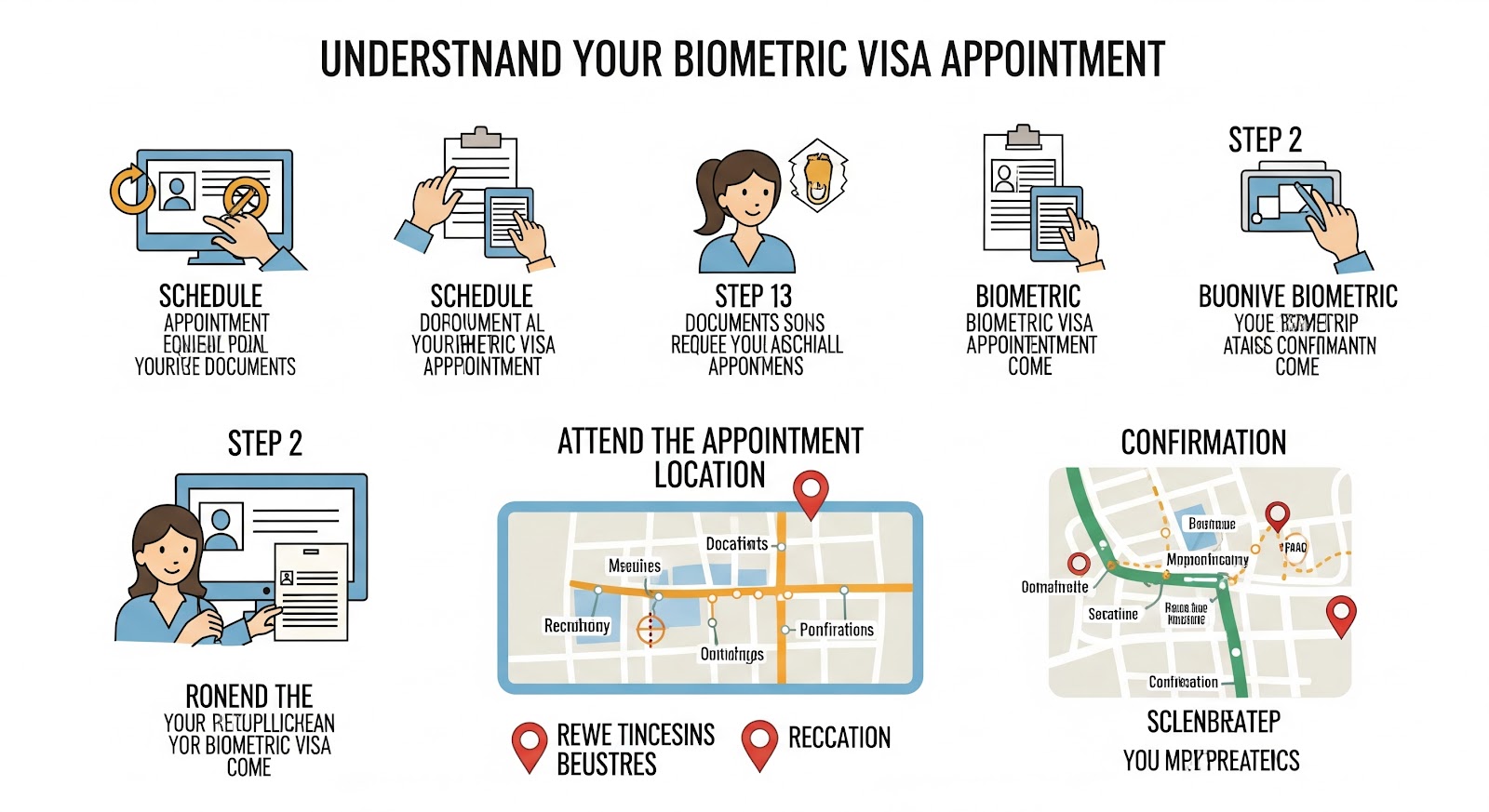
Biometric Data: Fingerprints and digital photograph (collected at a visa application center).
Police Clearance Certificate (PCC): For long-term stays or specific countries.
Medical Certificate/Vaccination Record: Especially for long-term visas or if traveling from certain regions (e.g., TB test for UK, Yellow Fever for some countries).
Academic Technology Approval Scheme (ATAS) Certificate: For certain sensitive study programs in the UK.
Language Test Scores: IELTS, TOEFL, etc., for study or skilled worker visas.
Marriage Certificate/Birth Certificates: For family reunification visas.
NOC (No Objection Certificate): From employer/school.
Consent Letters: For minors traveling alone or with one parent (from the non-traveling parent).
Cover Letter: A personal letter explaining the purpose of your trip, itinerary, financial arrangements, and your intention to return. While not always mandatory, it's highly recommended as it provides context.
Tips for a Successful Application in 2025
Start Early: Visa processing times can vary, so apply well in advance of your planned travel date (often up to 6 months prior).
Check Official Sources: Always refer to the official website of the embassy, consulate, or designated visa application center (like VFS Global) for the most accurate and up-to-date requirements for your specific visa type and nationality. Regulations can change, even within a year.
Organize Neatly: Present your documents in a clear, logical order (e.g., according to the checklist provided by the embassy). Use folders and labels.
Provide Originals AND Copies: While originals are usually required for verification, photocopies are often submitted. Always keep a set of copies for your own records.
Truthfulness is Key: Provide only genuine and accurate information. Any discrepancies or false documents can lead to immediate refusal and a potential ban from applying in the future.
Address Weaknesses: If you have a potential weakness (e.g., low bank balance, new job), address it directly in your cover letter and provide additional supporting documents if possible (e.g., sponsorship).
Interview Preparation: If an interview is required, be prepared to answer questions honestly and clearly about your travel plans, financial situation, and ties to your home country.
By meticulously following this universal visa document checklist for 2025 and paying close attention to country-specific requirements, you significantly increase your chances of a smooth and successful visa application, bringing your international travel plans closer to reality.


Comments
Post a Comment