Your Gateway to Opportunity: How to Obtain a Business Visa for the USA
The United States of America, a powerhouse of innovation, commerce, and industry, continues to be a top destination for global business professionals. Whether you're attending a conference, meeting clients, or exploring investment opportunities, securing the right visa is your essential first step. For most short-term business activities, the B-1 visa is your primary pathway. Understanding its requirements and the application process is key to a successful journey across the Atlantic.

Understanding the B-1 Business Visitor Visa
The B-1 visa is a non-immigrant visa category specifically designed for individuals traveling to the U.S. temporarily for business purposes. It is not a work visa, and you generally cannot receive a salary or payment from a U.S. source for services rendered. Permitted activities under a B-1 visa typically include:
Consulting with business associates.
Attending scientific, educational, professional, or business conventions/conferences.
Negotiating contracts.
Participating in short-term training (if employed outside the U.S. and the training is related to your employment).
Independent research.
Purchasing property.
It's vital to clearly distinguish between permitted B-1 activities and activities that require a work visa (like an H-1B, L-1, etc.). Any engagement in local labor for hire is strictly prohibited.
The Application Process: A Step-by-Step Guide
For Indian citizens applying for a B-1 visa, the process generally involves these key steps:
Determine Your Eligibility: Ensure your intended activities align with the permissible scope of a B-1 visa. Your visit must be temporary, and you must intend to return to your home country.
Complete the DS-160 Form: This is the Online Nonimmigrant Visa Application. You must accurately and completely fill out this form, which collects your personal, travel, and security information. Be meticulous, as any errors can cause delays or issues. Upon completion, you will receive a DS-160 confirmation page with a barcode.
Pay the Visa Application Fee: The fee (currently $185 USD for B-1/B-2 visas) is non-refundable and non-transferable. You'll need to pay this fee before you can schedule your appointments. Payment methods vary by country; in India, this typically involves online bank transfers (NEFT), IMPS, or at certain Citibank/Axis Bank branches.
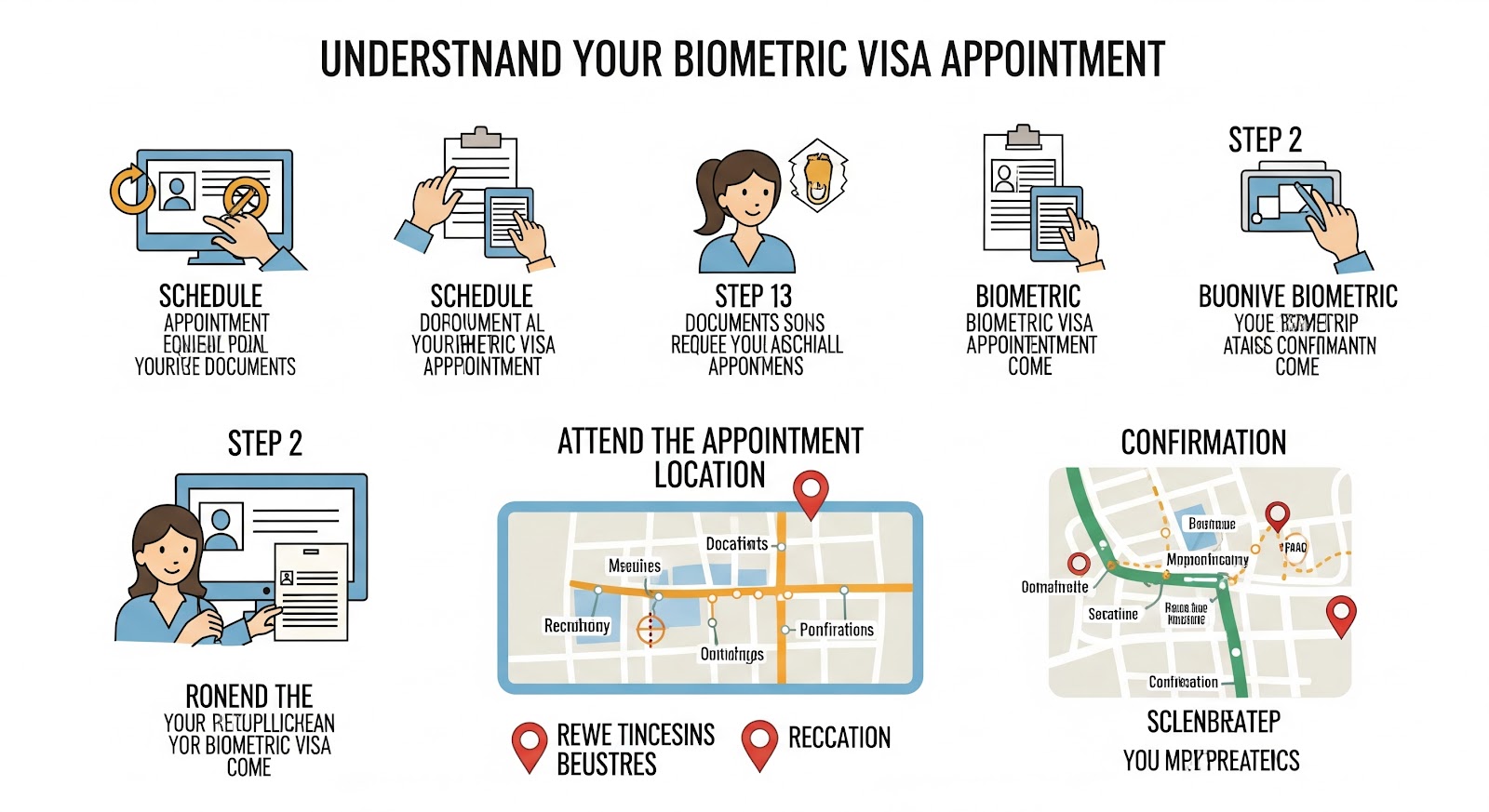
Schedule Your Appointments: After paying the fee, you will schedule two appointments:
Appointment 1: Visa Application Center (VAC) / OFC (Offsite Facilitation Center): Here, your fingerprints and photograph (biometrics) will be taken.
Appointment 2: Consular Interview: This is the actual visa interview at the U.S. Embassy or Consulate.
It's crucial to schedule these well in advance, as appointment wait times can vary significantly, especially for first-time applicants in India.
Gather Required Documents: Prepare a comprehensive set of documents for your interview. While the exact list isn't exhaustive, here are the core requirements:
Valid Passport: Must be valid for at least six months beyond your intended period of stay in the U.S. (unless exempt by country-specific agreements).
DS-160 Confirmation Page: The printed page with the barcode.
Appointment Confirmation Page: Proof of your scheduled interview.
Visa Fee Payment Receipt.
Photograph: One recent (taken within the last six months) color photograph, meeting U.S. visa photo specifications. (Usually taken at the VAC, but good to have a backup).
Invitation Letter from U.S. Company/Organization: This is critical for business visas. It should detail:
The purpose and nature of your visit.
The duration of your stay.
The U.S. company's contact information.
Who will cover your travel and living expenses.
Letter from Your Indian Employer: On company letterhead, stating your position, purpose of travel, duration, and confirming your employment and intent to return to India.
Proof of Funds: Bank statements (personal and/or company), salary slips, tax returns, to demonstrate you can cover your expenses during your stay.
Ties to India: Documents proving strong ties to your home country to convince the consular officer of your intent to return. This can include:
Family ties (marriage certificate, birth certificates of dependents).
Property ownership deeds.
Proof of ongoing employment or business.
Bank accounts, fixed deposits, or other significant assets.
Travel Itinerary: Tentative flight and accommodation bookings.
Attend Your Consular Interview: This is the most crucial part. Be prepared to answer questions about:
The purpose of your visit.
Your business activities in the U.S.
Your professional background and current employment.
Your financial situation and how you will support yourself.
Your ties to India and your intent to return.
Speak clearly, concisely, and truthfully.
Receive Your Decision: At the end of the interview, the consular officer will typically inform you of their decision. If approved, your passport will be retained for visa stamping and couriered back to you.
Key Considerations for a Successful Application:
Honesty is Paramount: Provide accurate and truthful information on your DS-160 form and during your interview. Any misrepresentation can lead to a visa refusal and future bans.
Demonstrate Non-Immigrant Intent: The core challenge for B-1 applicants is to convince the consular officer that you have no intention of staying in the U.S. permanently. Strong ties to India are crucial evidence.
Be Prepared for Questions: While nerve-wracking, the interview is your chance to clarify your purpose. Practice answering common questions clearly and confidently.
Check Wait Times: Always check the estimated visa appointment wait times on the U.S. Department of State website for the specific Embassy/Consulate where you plan to apply.
Purpose Alignment: Ensure your stated purpose of travel precisely matches the activities permitted under a B-1 visa.
Obtaining a U.S. business visa from India requires thorough preparation and a clear understanding of the requirements. By following these steps and presenting a compelling case, you can pave your way to explore and leverage business opportunities in the United States.
Frequently Asked Questions (FAQs) about USA Business Visas
Q1: What is the main difference between a B-1 and B-2 visa?
A1: The B-1 visa is for business purposes, while the B-2 visa is for tourism, vacations, visiting family/friends, and medical treatment. Often, these are issued as a combined B-1/B-2 visa, allowing you to engage in either business or tourist activities.
Q2: How long can I stay in the U.S. on a B-1 business visa?
A2: While the visa itself can be valid for several years (e.g., 10 years for Indian citizens), the length of your permitted stay on each visit is determined by the U.S. Customs and Border Protection (CBP) officer at the port of entry. It's usually granted for a maximum of 6 months, but can be shorter. You'll receive an I-94 arrival record (electronic) indicating your "Admit Until" date.
Q3: Can I work or be employed in the U.S. on a B-1 visa?
A3: No, you cannot work for a U.S. employer or receive payment from a U.S. source for services rendered on a B-1 visa, with very limited exceptions (e.g., specific international agreements or professional engagements that are temporary and the payment comes from outside the U.S.).
Q4: Is an invitation letter mandatory for a B-1 visa?
A4: While not explicitly listed as "mandatory" for all cases, an invitation letter from a U.S. company or organization is highly recommended and often crucial. It serves as strong evidence of your legitimate business purpose and helps the consular officer understand the nature of your visit.
Q5: What if my visa application is refused?
A5: If your visa application is refused, the consular officer will usually provide a reason (often related to Section 214(b) of the INA, indicating you did not overcome the presumption of immigrant intent). You can reapply, but it's advisable to understand the reason for refusal and address any shortcomings in your next application.
Q6: How much money should I show in my bank account for a B-1 visa?
A6: There's no specific fixed amount. You need to demonstrate sufficient funds to cover all your expenses (travel, accommodation, living costs) for your entire intended stay in the U.S. without resorting to unauthorized employment. This is assessed on a case-by-case basis.
Q7: Do I need a return flight booked before my interview?
A7: While you don't always need a confirmed, non-refundable ticket, having a tentative travel itinerary or proof of round-trip flight bookings can strengthen your application by demonstrating your intent to return to India.


Comments
Post a Comment