Your Passport to European Business: A Guide to the Schengen Business Visa from India
Europe, with its diverse economies, innovative industries, and vibrant trade networks, is a prime destination for Indian businesses seeking global expansion, collaboration, and new opportunities. Whether you're attending a major industry conference in Germany, negotiating a deal in France, or meeting partners in the Netherlands, a Schengen Business Visa is your essential gateway.
For Indian professionals, understanding the nuances of applying for a Schengen Business Visa is crucial for a smooth and successful trip. This visa allows you to travel to any of the 29 Schengen Area countries for up to 90 days within a 180-day period.

Understanding the Schengen Business Visa
The Schengen Area encompasses most European Union member states and a few non-EU countries, operating as a single jurisdiction for international travel purposes. A Schengen visa issued by one member state is generally valid for travel throughout the entire area. The "Business" purpose for a Schengen visa (often categorized as a "Type C" short-stay visa) means your visit is temporary and aimed at business-related activities, not employment.
Permitted business activities typically include:
Attending business meetings or consultations.
Negotiating contracts.
Participating in trade fairs, exhibitions, or conferences.
Conducting independent research or exploration of investment opportunities.
Attending short-term training sessions (not involving local employment).
Key Steps for Indian Applicants: Securing Your European Business Visa
Applying for a Schengen Business Visa from India involves a standardized process, but attention to detail is paramount.
Step 1: Determine the Correct Embassy/Consulate
You must apply at the embassy or consulate of the Schengen country that is your:
Main Destination: The country where you will spend the most time.
First Point of Entry: If you will spend equal amounts of time in multiple Schengen countries, apply to the country you will enter first.
Step 2: Complete the Online Schengen Visa Application Form
Most Schengen countries now require you to fill out an online application form specific to their embassy or through a common Schengen portal. Ensure all information is accurate and matches your supporting documents. Print the completed form and sign it.
Step 3: Gather Essential Documentation
This is the most critical phase. Requirements are stringent and comprehensive. While specific lists vary slightly by country, general requirements include:
Valid Passport: Issued within the last 10 years, valid for at least three months beyond your intended departure from the Schengen Area, and with at least two blank pages.
Schengen Visa Application Form: Duly filled and signed.
Passport-Sized Photographs: Recent, color photos meeting Schengen requirements (e.g., 3.5 x 4.5 cm, white background).
Cover Letter from Applicant: Stating the purpose of travel, itinerary, and intent to return to India.
Invitation Letter from European Host: On company letterhead, detailing the purpose of the visit, duration, exact dates, names of attendees, and confirmation of financial responsibility (if applicable).
Letter from Your Indian Employer: On company letterhead, confirming your employment, position, purpose of travel, and duration of leave, guaranteeing your return to India.
Proof of Funds: Personal bank statements for the last 3-6 months, salary slips, or a letter from your Indian company confirming sponsorship for your trip.
Travel Itinerary: Tentative flight reservations (round-trip), including entry and exit dates.
Proof of Accommodation: Hotel bookings for the entire duration of your stay in the Schengen Area.
Travel Medical Insurance: Mandatory for the entire period of your intended stay, valid throughout the Schengen Area, and with a minimum coverage of €30,000 for medical emergencies, hospitalization, and repatriation.
Evidence of Strong Ties to India: Documents like property deeds, marriage certificate, family details, and proof of stable employment to demonstrate your intent to return.
Step 4: Pay the Visa Fee
The standard Schengen visa fee (currently €80 for adults, often equivalent in INR) is non-refundable. Children have reduced fees. Payment methods vary by VFS Global centre or consulate.
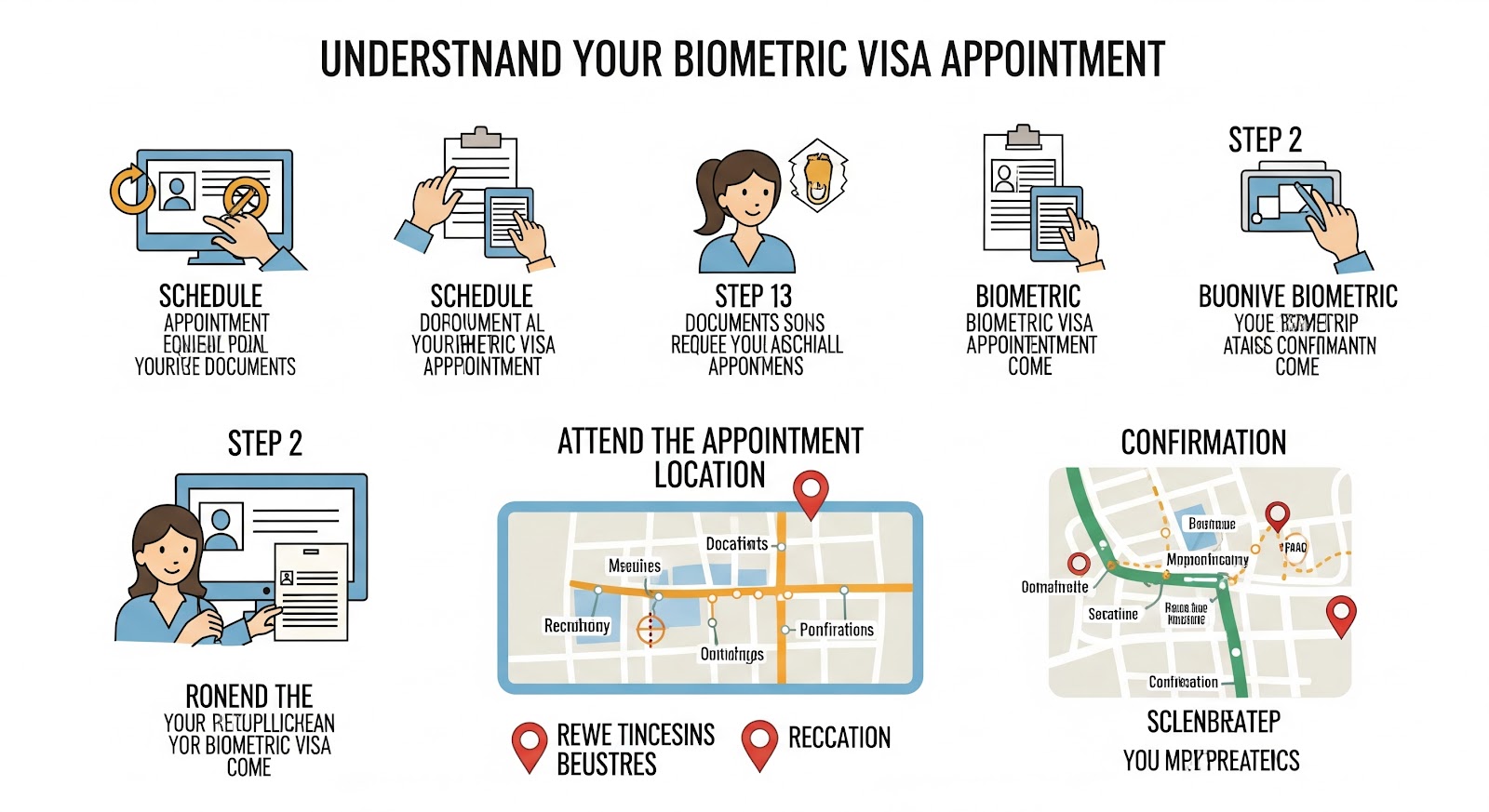
Step 5: Schedule and Attend Your Biometrics Appointment
Most Schengen applications from India are processed through VFS Global. You will need to schedule an appointment at your nearest VFS Global Visa Application Centre.
At the appointment, your fingerprints and a digital photograph will be collected (biometrics). You will also submit your physical documents (or have them scanned if you've uploaded them online).
Step 6: Visa Processing and Collection
After your appointment, your application will be processed by the respective embassy/consulate. Processing times typically range from 15 working days but can extend to 30 or even 60 days in complex cases or during peak seasons.
Once a decision is made, you will be notified to collect your passport from the VFS Global centre or have it couriered to you.
Crucial Advice for Indian Applicants:
Apply Early: Especially during peak travel seasons, visa appointments and processing can take time.
Accuracy is Key: Ensure all information across your application and documents is consistent and accurate.
Organize Documents: Present your documents clearly and in the requested order.
Be Honest: Provide truthful information. Any misrepresentation can lead to visa refusal and future bans.
By following these guidelines and meticulously preparing your application, you can confidently apply for your Schengen Business Visa and embark on your European business journey.
Frequently Asked Questions (FAQs) About Schengen Business Visas from India
Q1: Which Schengen country should I apply to if I'm visiting multiple countries?
A1: You should apply to the embassy or consulate of the Schengen country where you intend to spend the most time (main destination). If you will spend an equal amount of time in multiple countries, apply to the country that will be your first point of entry into the Schengen Area.
Q2: What is the validity period of a Schengen Business Visa?
A2: A Schengen short-stay (Type C) visa allows for a stay of up to 90 days within any 180-day period. The visa itself can be issued for a single entry, multiple entries, and for a validity period that could range from a few weeks to several years, but the 90/180-day rule always applies.
Q3: Is travel medical insurance mandatory for a Schengen Business Visa?
A3: Yes, absolutely. Comprehensive travel medical insurance is a mandatory requirement for all Schengen visa applications. It must be valid throughout the entire Schengen Area for the duration of your stay and have a minimum coverage of €30,000 for medical emergencies, hospitalization, and repatriation.
Q4: Can I perform paid work in Europe on a Schengen Business Visa?
A4: No, a Schengen Business Visa does not permit you to perform paid work or be employed by a company in any Schengen country. Your activities must strictly be business-related as defined by the visa category, and your remuneration should continue to come from your home country employer.
Q5: What are common reasons for a Schengen Business Visa rejection for Indian applicants?
A5: Common reasons include:
Insufficient proof of funds.
Lack of strong ties to India (leading to suspicion of overstaying).
Incomplete or incorrect documentation.
Unclear or inconsistent purpose of visit.
Previous immigration violations or criminal record.
Failure to meet the medical insurance requirements.


Comments
Post a Comment