A Guide to Navigating the German Corporate Visa System for Indian Professionals
Germany stands as an undisputed economic powerhouse in Europe and a pivotal partner for Indian businesses. For Indian professionals, an assignment or business trip to Germany represents a significant opportunity. However, the German immigration system, renowned for its precision and structure, can seem complex. The term "corporate visa" itself can be misleading, as Germany offers several distinct pathways depending on the duration and nature of your engagement.

Successfully navigating this system requires understanding which path is right for you. Is it a short trip for a critical negotiation, or a long-term assignment to lead a project? This guide will demystify Germany’s visa system for Indian professionals, breaking it down into two main categories: short-term business visits and long-term work assignments.
Part 1: The Short-Term Engagement – The Schengen Business Visa
For most temporary corporate activities, the correct visa is the Schengen Visa (Type C) for business purposes. This visa is your key for trips lasting up to 90 days within any 180-day period.
Who is it for?
This visa is ideal for professionals who need to:
Attend business meetings, conferences, or trade fairs.
Negotiate or sign contracts with German partners.
Undergo short-term training provided by a German company.
Conduct market research or explore business opportunities.
Key Documentation Checklist:
A successful Schengen business visa application hinges on meticulous documentation that proves the legitimacy of your trip.
Invitation Letter: A formal invitation from your German business partner. This is a crucial document and should detail the purpose of your visit, dates, and your itinerary.
Cover Letter: A letter from your Indian employer on company letterhead, explaining your role, the purpose of the trip, and confirming that the company will cover all expenses.
Travel Itinerary: Confirmed flight bookings and hotel reservations for the duration of your stay.
Travel Medical Insurance: Mandatory insurance coverage of at least €30,000 that is valid for the entire Schengen area.
Proof of Financial Means: Recent salary slips and personal bank statements to prove your financial standing.
Proof of Employment: A letter from your employer confirming your continued employment.
The Application Process:
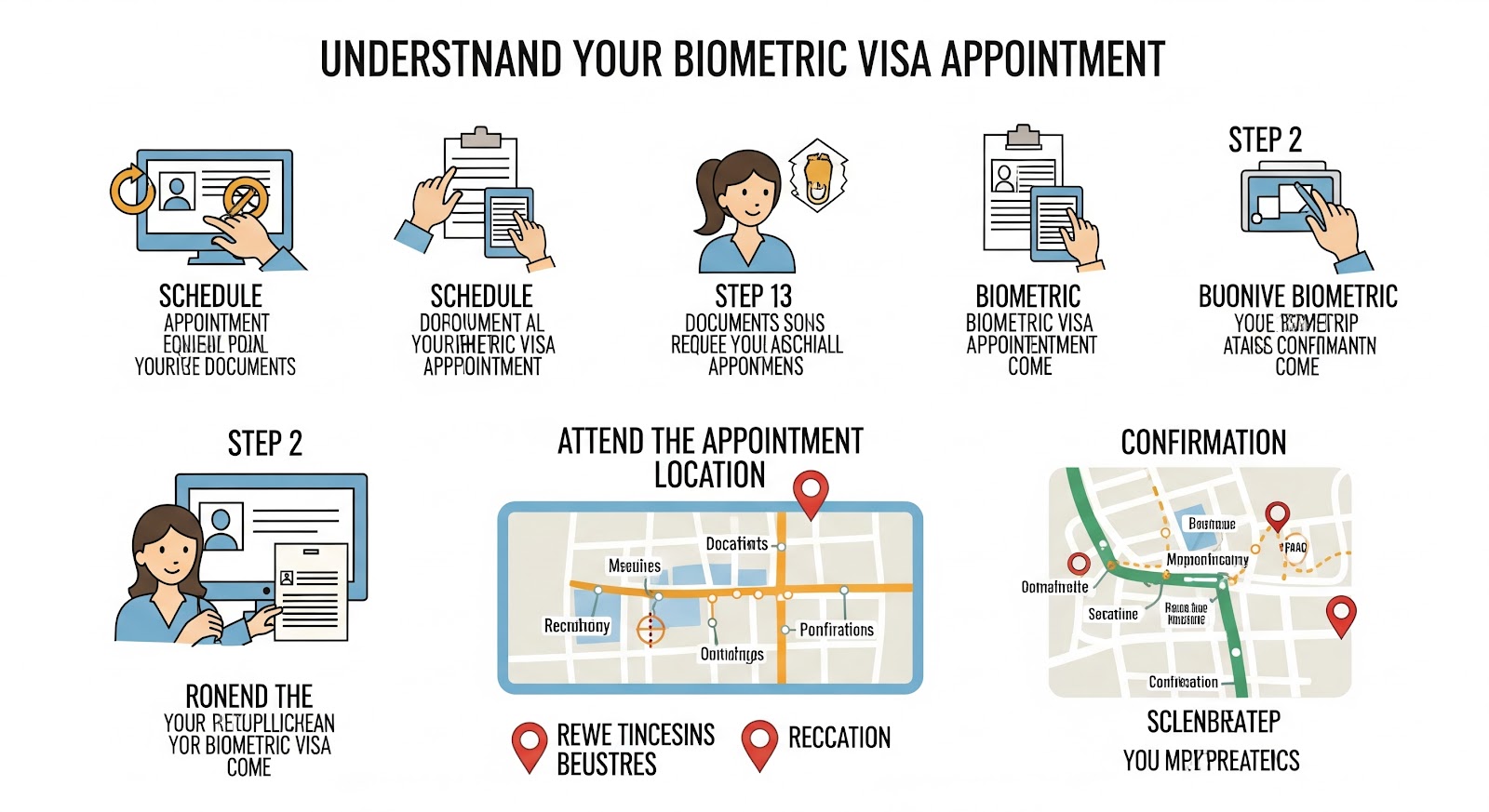
From India, applications are typically submitted through the official service provider, VFS Global, which collects your documents and biometrics on behalf of the German Embassy or Consulate. While the standard processing time is around 15 calendar days, it is highly advisable to apply at least 4-6 weeks in advance.
Part 2: The Long-Term Assignment – National Visas (Type D)
If your corporate role in Germany involves working and staying for more than 90 days, you must apply for a National Visa (Type D) from India. This visa allows you to enter Germany and then apply for a residence permit. The two most common routes for corporate professionals are the EU Blue Card and the Intra-Corporate Transferee (ICT) Card.
Option A: The EU Blue Card
This is Germany's primary instrument for attracting highly skilled talent from outside the EU.
Who is it for? Highly qualified professionals with a recognized university degree and a concrete job offer in Germany that meets a specific minimum salary threshold. For in-demand fields like IT, engineering, and medicine (known as "shortage occupations"), this salary threshold is lower, making it more accessible.
Key Advantage: It provides a faster and more direct path to obtaining permanent residency in Germany.
Option B: The Intra-Corporate Transferee (ICT) Card
This route is specifically designed for multinational companies to transfer key personnel.
Who is it for? Managers, specialists, or graduate trainees who are being transferred from an Indian office to a German branch of the same corporate group.
Key Requirement: The applicant must have been employed with the company for a minimum period (e.g., at least six months) before the transfer.
The Application Process for National Visas:
This process is more in-depth than a Schengen visa application. You will apply directly through the German Embassy or Consulate in India. A crucial step is that most applications require approval from the Federal Employment Agency (Bundesagentur für Arbeit) in Germany. This internal German process means that processing times are significantly longer, often taking several weeks to a few months.
Conclusion: Precision is Key
Germany's visa system, much like its engineering, is built on precision. Choosing the correct visa category from the outset is the most critical step. For short, decisive business trips, the Schengen visa offers efficient access. For long-term, strategic assignments, the EU Blue Card and ICT Card provide robust frameworks for corporate mobility. In every case, the success of your application rests on the quality, accuracy, and completeness of your documentation.
Navigating these distinct pathways requires careful planning and a thorough understanding of the requirements. For corporations managing the international mobility of their teams, ensuring every application is perfectly aligned with German immigration law is paramount. To streamline these complex visa procedures for your organization, engaging with dedicated professionals can make all the difference. You can learn more by exploring specialized Corporate Services.
Frequently Asked Questions (FAQ)
1. What is the main difference between a Schengen Visa and a German National Visa?
A Schengen Visa (Type C) is for short stays (up to 90 days in a 180-day period) within the entire Schengen Area and does not permit paid employment. A National Visa (Type D) is only for Germany, allows for long-term stays (over 90 days), and is the required visa for taking up employment, which is then converted into a residence permit after arrival.
2. Is travel medical insurance really mandatory for a short business trip to Germany?
Yes, it is an absolute requirement for the Schengen visa. Your application will be rejected without proof of valid travel medical insurance that covers at least €30,000 for medical emergencies and repatriation, and is valid across all Schengen states.
3. If I get an EU Blue Card or ICT Card, can my family come to Germany with me?
Yes, both the EU Blue Card and the ICT Card are qualifying residence permits that allow for family reunification. Your spouse and minor children can apply for National Visas to join you in Germany. Your spouse is typically also granted the right to work.


Comments
Post a Comment