Bridging Borders: A Guide to Applying for a Canadian Business Visa from the US
The US and Canada share more than just the world’s longest land border; they share a deeply integrated economic relationship. For many professionals legally residing in the United States, a business trip to Toronto, Vancouver, or Montréal is a common and necessary part of their job. Whether you're an Indian citizen on an H-1B visa, a student on an F-1, or a Lawful Permanent Resident (Green Card holder), accessing Canada for corporate activities requires a specific travel document.
While the process is straightforward, it requires a clear understanding of the requirements from the perspective of an applicant who is not a US citizen. This guide will walk you through the steps and key considerations for securing a Canadian business visa while applying from the US.

It's a Visitor Visa, for Business Purposes
First, let's clarify the terminology. Canada does not have a separate category called a "business visa." Instead, you will be applying for a Visitor Visa, also known as a Temporary Resident Visa (TRV). The crucial part is that you must clearly state that the purpose of your visit is business.
A business visit allows you to engage in international business activities without directly entering the Canadian labour market. Permissible activities include:
Attending meetings, conferences, conventions, or trade fairs.
Negotiating contracts and trade agreements.
Meeting with business partners.
Receiving training from a Canadian parent company.
You are not permitted to perform hands-on work or receive payment from a Canadian source on a business visitor visa.
The Application Process: A Step-by-Step Guide
The most efficient way to apply from the US is through the online portal on the Immigration, Refugees and Citizenship Canada (IRCC) website.
Determine Your Eligibility: Before you start, use the official IRCC online tool to answer a few questions. This will confirm that you need a visa and will generate a personalized checklist of required documents and forms for your specific situation.
Gather Your Documents: This is the most critical stage. You will need to prepare digital copies of all your required documents to upload. (A detailed checklist is provided below).
Complete the Application and Pay the Fees: Fill out the required application forms (like IMM 5257) online. You will need to pay two separate fees: the application fee and the biometrics fee.
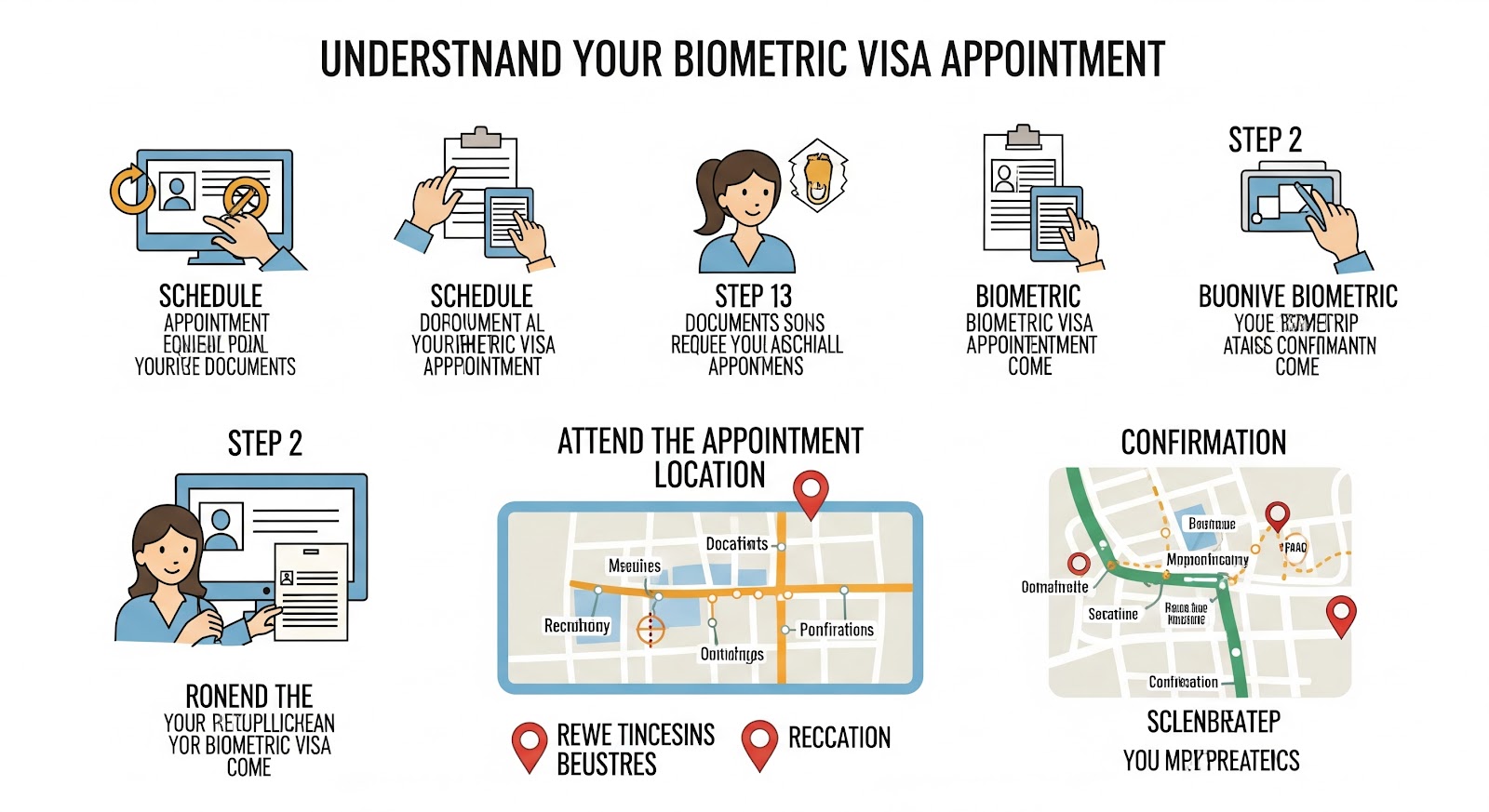
Submit and Wait for the Biometrics Letter: After you submit your complete application online, you will receive a Biometric Instruction Letter (BIL) in your IRCC account, usually within 24-48 hours. You cannot book your biometrics appointment without this letter.
Give Your Biometrics: Schedule an appointment at a designated Application Support Center (ASC) in the United States. You must bring your passport and the Biometric Instruction Letter to this appointment.
The Essential Document Checklist
Meticulous documentation is key to a successful application. Here’s what you’ll generally need:
Proof of Legal Status in the US: This is non-negotiable. You must provide a clear copy of your valid US immigration document, such as:
H-1B/L-1 Visa: I-797 Approval Notice.
F-1 Visa: Your I-20 form and EAD card if applicable.
Green Card: A copy of your Lawful Permanent Resident card (front and back).
Passport: Digital copy of your passport’s bio-data page and all pages with stamps and visas. Your passport must have at least one blank page and be valid for the duration of your stay.
Letter of Invitation from Canada: A formal invitation letter from the Canadian company you are visiting. It must include the host's contact details, the specific purpose and duration of your visit, and a statement confirming who will cover your expenses.
Letter from Your US Employer: A letter on your company’s letterhead detailing your position, salary, and the reason for your business trip to Canada. Crucially, it must state that your US employment will continue and that your US employer is covering the trip's costs.
Proof of Financial Support: Recent bank statements showing you have sufficient funds to cover your travel and stay.
Digital Photo: A recent, passport-style digital photograph meeting IRCC’s specifications.
Travel History: Copies of previous visas (US, UK, Schengen, etc.) to demonstrate a history of complying with immigration rules.
Proof of Ties: You must convince the visa officer you will leave Canada at the end of your visit. Your legal status and stable job in the US are strong ties. Additional evidence could include property ownership or family ties in the US or your home country.
Processing Times
Processing times for visitor visas from the US can vary. As of mid-2025, you can expect a processing time of approximately 4 to 6 weeks after your biometrics are submitted. However, you should always check the official IRCC processing times tool on their website for the most up-to-date information, as these timelines can change based on application volume.
Navigating visa applications, even for short business trips, can be a complex process that requires precision and attention to detail. For corporations managing the cross-border travel of their employees, ensuring all documentation is perfectly aligned with immigration requirements is paramount for success. For assistance with complex travel and visa needs for your team, exploring professional Corporate Services can provide clarity and streamline the entire process.
Frequently Asked Questions (FAQ)
1. Do I need to send my physical passport when applying from the US?
When applying online from within the US, you do not initially send your physical passport. You upload a digital copy. If your visa is approved, you will receive a "Passport Request" letter from IRCC with instructions on how and where to mail your passport for the visa stamping.
2. I have a valid US visa stamp in my passport. Do I still need to give biometrics for Canada?
Yes. The US and Canada are separate countries with their own immigration systems. Your biometrics given for a US visa are not transferable to Canada. If you are from a country that requires biometrics for Canada, you must provide them, regardless of your US visa status.
3. As an H-1B holder, what are my strongest "ties" to prove I will leave Canada?
Your valid H-1B status and the I-797 approval notice are your strongest ties to your life in the US. Paired with a letter from your US employer confirming your ongoing employment and the temporary nature of your trip, this serves as powerful evidence of your intent to return to the United States.


Comments
Post a Comment