Navigating the Path to the USA: A Guide to Corporate Visas for Indian Professionals
The economic ties between India and the United States have never been stronger. For countless Indian professionals, this translates into a growing need to travel to the US for corporate purposes—be it for crucial client meetings, contract negotiations, or industry-defining conferences. However, the path to securing the right to enter the US for business is paved with specific rules and procedures.
Many applicants ask for a "corporate visa," but in the intricate world of US immigration, there isn't a single visa with this name. Instead, the US offers several specific visa categories tailored to different business needs. Understanding which visa applies to your situation is the first and most critical step toward a successful application.

For the vast majority of temporary business trips, the primary gateway is the B-1 Visitor Visa. This guide will demystify the B-1 visa process for Indian applicants and touch upon other relevant categories for corporate travel.
The Workhorse of Business Travel: The B-1 Visa
The B-1 visa is designed for individuals entering the US for a temporary period to engage in legitimate business activities. The key word here is "temporary." The B-1 visa does not permit you to engage in local employment or receive a salary from a US-based source.
What activities are permitted on a B-1 Visa?
Attending business meetings, consultations, and discussions.
Negotiating and signing contracts.
Attending a scientific, educational, professional, or business conference or seminar.
Undertaking independent research or training (as long as it's not paid work).
Handling litigation or settling an estate.
It is crucial to understand that the B-1 visa is not a work permit. Any hands-on labor, project implementation, or role that would typically be performed by a US employee is strictly prohibited and can have severe consequences.
The Application Journey: A Step-by-Step Guide for Indians
The US visa application process is systematic and must be followed precisely.
Complete the DS-160 Form: The first step is to accurately fill out the online Nonimmigrant Visa Application, Form DS-160. This form gathers all your personal and professional details and the specifics of your intended trip. Once submitted, print the confirmation page with the barcode.
Pay the Visa Fee: You must pay the non-refundable visa application fee. This can typically be done through various methods in India, including bank transfers (NEFT) and cash at designated banks.
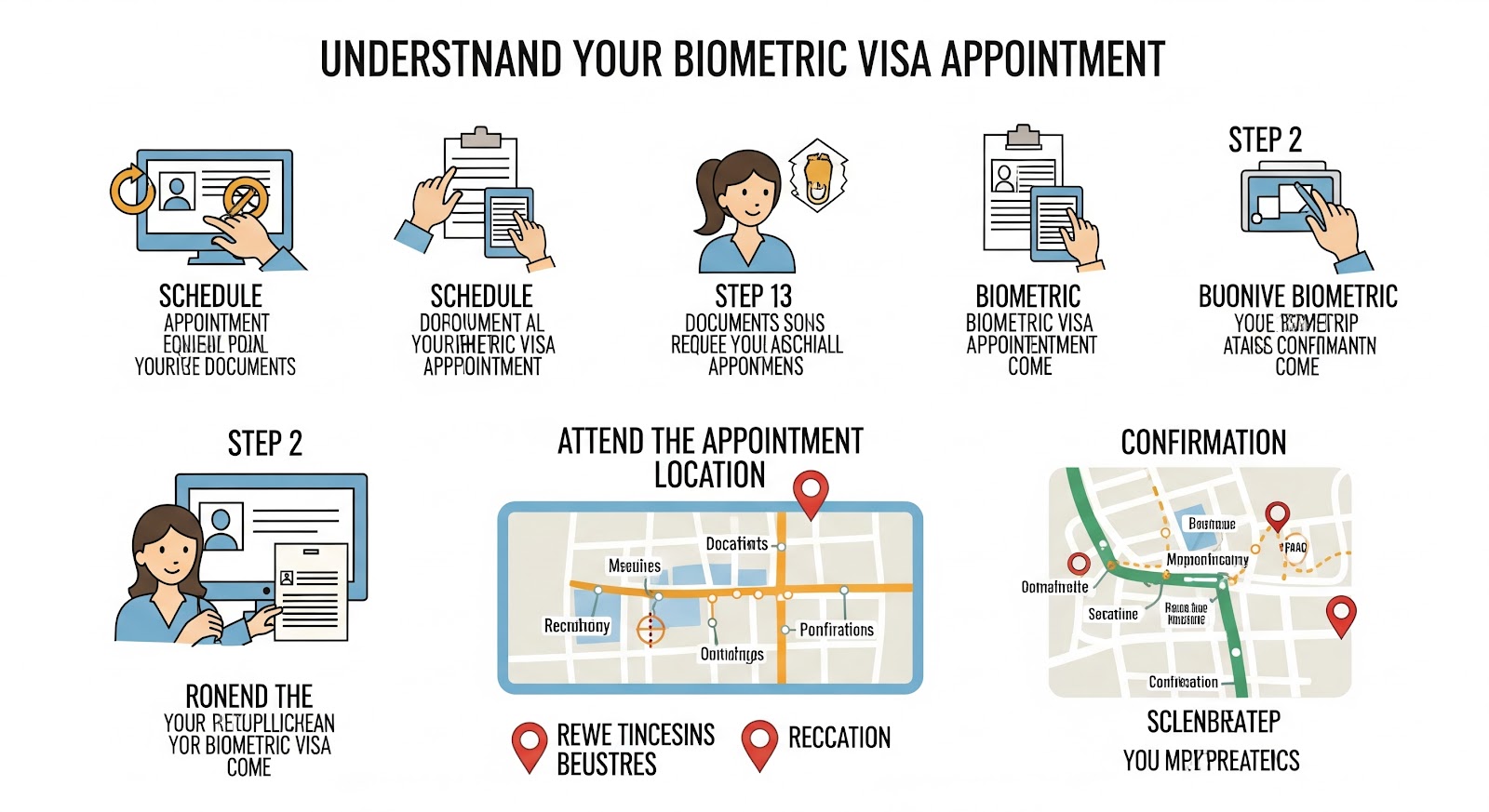
Schedule Your Appointments: You will need to schedule two separate appointments through the online portal:
Biometrics Appointment: At a Visa Application Centre (VAC) to have your fingerprints and photograph taken.
Visa Interview: At a US Embassy (New Delhi) or Consulate (Mumbai, Chennai, Kolkata, or Hyderabad).
Prepare Your Document File: Meticulous preparation of your documents is essential for a successful interview.
Your Document Checklist for Success
While you will only be asked for some of these, you must have them all with you, neatly organized.
Core Documents:
Your current passport, valid for at least six months beyond your intended stay.
The DS-160 confirmation page.
Your appointment confirmation letter.
The visa fee payment receipt.
Supporting Documents (to prove the purpose of your trip and your ties to India):
From your Indian Employer: A letter on company letterhead detailing your designation, salary, the purpose and duration of your trip to the US, and a clear statement that the company will bear all your travel expenses.
From the US Company: An invitation letter detailing the purpose of your visit, the intended duration, and contact information for the US associate.
Proof of Financial Stability: Your personal bank statements for the last six months, income tax returns (ITRs) for the last three years, and salary slips.
Proof of Strong Ties to India: This is critical to prove your "non-immigrant intent." Documents can include property ownership deeds, evidence of immediate family (spouse, children) residing in India, and proof of your stable employment.
Beyond the B-1: Other Visas for Corporate Needs
While the B-1 covers temporary visits, other visas exist for more involved corporate roles:
L-1 Visa (Intra-company Transferee): For employees of a multinational company who are being transferred from an Indian office to a parent, subsidiary, or affiliate company in the US. This is for longer-term managerial roles or roles requiring specialized knowledge.
H-1B Visa (Specialty Occupation): For professionals in specialized fields coming to the US to perform a specific job for a US employer. This is a work visa and involves a much more complex petition process initiated by the US employer.
Navigating the complexities of US visa applications requires careful planning, meticulous documentation, and a clear understanding of the specific requirements for your travel purpose. A well-prepared application not only increases the chances of success but also ensures a smooth and stress-free process. For organizations seeking to streamline this process for their employees, engaging with dedicated professionals can be invaluable. You can learn more by exploring specialized Corporate Services.
Frequently Asked Questions (FAQ)
1. What is the difference between a B-1 and a B-2 visa?
The B-1 visa is for business-related activities, while the B-2 visa is for tourism, visiting family and friends, or receiving medical treatment. Often, the US issues a combined B-1/B-2 visa, but when you enter the US, you must clearly state the primary purpose of your trip to the Customs and Border Protection (CBP) officer.
2. How long can I stay in the US on a B-1 visa?
While a B-1 visa for an Indian citizen can be valid for up to 10 years (meaning you can travel on it for 10 years), the duration of each stay is determined by the CBP officer at the port of entry. Typically, a stay of up to six months is granted, and it will be stamped in your passport.
3. Am I allowed to search for a job in the US while on a B-1 visa?
No, absolutely not. Actively seeking employment, attending job interviews for roles with US companies, or distributing resumes is strictly prohibited on a B-1 visa. Doing so is a violation of visa rules and can result in immediate visa cancellation and a ban on future travel to the US.


Comments
Post a Comment