Unlocking Global Talent: The Essential Guide to Corporate Visas for IT Professionals
In today's hyper-connected world, the Information Technology (IT) sector operates without borders. A groundbreaking project might be conceived in Silicon Valley, developed by a team in Bengaluru, and supported by cybersecurity experts in London. This global collaboration is the engine of modern innovation, but it runs on a crucial fuel: talent mobility. For IT companies, the ability to seamlessly move skilled professionals across countries isn't just a logistical task; it's a strategic imperative. This is where corporate visas become one of the most vital tools in a company's arsenal.
Navigating the complex web of international immigration law can be daunting, but understanding the fundamentals of corporate visas can empower both IT professionals and their employers to unlock a world of opportunities.

Why Are Corporate Visas a Linchpin for the IT Industry?
The demand for specialized IT talent far outstrips supply in many developed nations. Fields like Artificial Intelligence, Machine Learning, Data Science, and Cybersecurity are evolving so rapidly that companies must cast a global net to find individuals with the right expertise. Corporate visas provide the legal framework to bring this essential talent onboard.
The need extends beyond just hiring. Consider these common scenarios in the IT industry:
Intra-Company Transfers: An Indian tech giant needs a seasoned project manager to oversee a critical client implementation in its New York office for a year.
Project-Specific Deployment: A German software company wins a contract in Australia that requires a team of its top developers to be on-site for six months.
Training and Development: A Canadian startup sends its junior engineers to its headquarters in the UK for specialized training on a new proprietary platform.
Global Leadership Mobility: A U.S.-based multinational promotes a high-performing director from its Singapore office to a leadership role at the corporate headquarters.
In each of these cases, a specific type of corporate-sponsored visa is the only pathway to make these strategic moves a reality, ensuring knowledge transfer, project success, and leadership continuity.
A World of Visas: Common Pathways for IT Professionals
While the term "corporate visa" is a broad descriptor for employer-sponsored immigration, the actual visa types vary significantly by country. Each is designed for a specific purpose and comes with its own set of rigorous requirements. Here are some of the most common visas sought by IT professionals:
United States: The H-1B visa is for 'specialty occupations' requiring a bachelor's degree or higher, making it a primary choice for IT roles. However, it's subject to an annual cap and a lottery system. The L-1 visa, on the other hand, is for intra-company transferees, allowing managers (L-1A) or employees with specialized knowledge (L-1B) to move from a foreign office to a U.S. branch.
United Kingdom: The Skilled Worker Visa is the main route for foreign professionals, including those in IT. It operates on a points-based system where applicants must score points for having a sponsored job offer, meeting salary thresholds, and proving English language proficiency.
Canada: Recognizing the tech talent crunch, Canada introduced the Global Talent Stream, which provides expedited processing for certain high-demand tech occupations, with applications often processed in just two weeks.
Australia: The Temporary Skill Shortage (TSS) visa (subclass 482) allows employers to sponsor a skilled worker to fill a position they cannot find a suitably skilled Australian to fill.
Germany: The EU Blue Card is specifically for highly qualified non-EU citizens, making it an attractive option for experienced IT experts looking to work within the European Union's largest economy.
The Application Journey: A Marathon, Not a Sprint
Obtaining a corporate visa is a meticulous and often lengthy process. While it varies by country and visa type, the general workflow involves several key stages:
Labor Market Testing & Sponsorship: The employer must often prove that they couldn't find a suitable candidate from the local workforce. Once this is established, the company officially sponsors the professional's application.
Documentation Gathering: This is the most intensive phase. Both the employer and the employee must compile a mountain of paperwork. This includes educational transcripts, professional certifications, detailed letters of experience, proof of the company's financial standing, and a comprehensive job description.
Petition and Application Filing: The company files a petition with the relevant immigration authority (e.g., USCIS in the U.S.). Once the petition is approved, the IT professional can submit their visa application to the consulate or embassy in their home country.
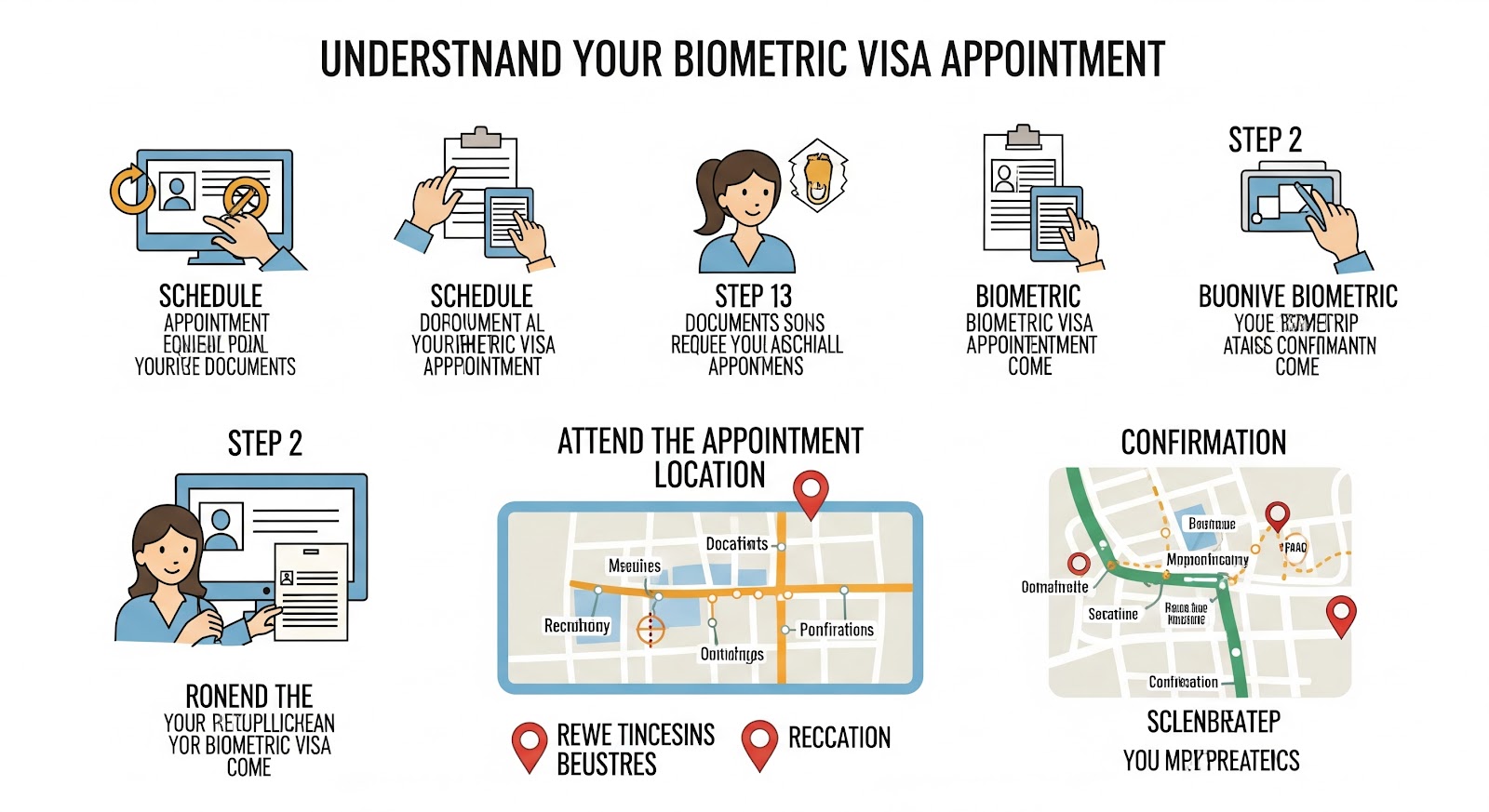
Biometrics and Consular Interview: Most processes require an in-person appointment for fingerprinting and an interview, where a consular officer verifies the applicant's intent and credentials.
Final Approval and Stamping: If successful, the visa is stamped into the professional's passport, granting them legal permission to travel and work in the destination country.
Conclusion
For the IT industry, global mobility is synonymous with growth and innovation. The ability to deploy the right talent to the right place at the right time is a powerful competitive advantage. While the path to securing a corporate visa for IT professionals is paved with complex regulations, meticulous paperwork, and tight deadlines, it remains an indispensable process. For tech companies looking to streamline this intricate journey and ensure every application is compliant and positioned for success, engaging with professional corporate services can be a game-changer, turning bureaucratic hurdles into strategic pathways for global expansion.
Frequently Asked Questions (FAQ)
1. What is the main difference between a tourist visa and a corporate visa?
A tourist visa strictly prohibits any form of employment or work activities. A corporate visa, or more accurately, an employer-sponsored work visa, is specifically designed to grant a foreign national the legal right to be employed and earn a salary in the destination country for a specific period.
2. How long does the corporate visa process for an IT professional typically take?
The timeline varies drastically depending on the country, the specific visa category, and the current processing backlogs. For example, Canada's Global Talent Stream can take a few weeks, while a U.S. H-1B visa, with its lottery and processing times, can take many months. It is wise to plan for a 6-12 month window for most processes.
3. Can an IT professional's family accompany them on a corporate visa?
Yes, most corporate visa categories have provisions for dependents (typically a legal spouse and unmarried children under 21). These family members are usually granted dependent visas, which may or may not include work authorization for the spouse, depending on the country's specific rules.
4. Who is responsible for the visa costs: the employee or the employer?
In almost all corporate visa scenarios, the sponsoring employer is expected to bear the majority of the costs, including legal fees and government application fees. This is often a legal requirement to ensure that hiring foreign talent does not undercut the local labor market.


Comments
Post a Comment